
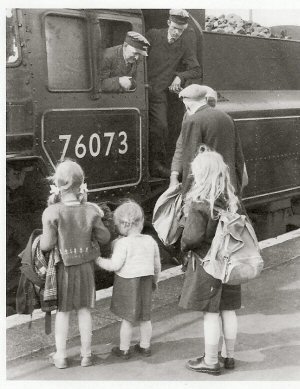
Forgotten Railways of Galloway was the subject of December’s meeting
Clearly and logically presented; accompanied by a “then” and “now” selection of dozens of revealing pictures; and with a “finale” of a short sound and colour movie of a journey recorded in the 1960’s, speaker Angus Rex, skillfully lead his audience down memory lane on the subject of “The forgotten Railways of Galloway”.
Many members of the audience had used the network of railways of Galloway as children or young adults, before the closure of the Kirkcudbright Railway branch line to Castle Douglas, so for them this was a nostalgic trip into recent history.
Angus Rex, originally brought up in Portpatrick in Galloway, has been a lifelong enthusiast for railways and has a particular interest in the network in Dumfries and Galloway.
He explained how Wigtownshire and the Stewartry of Kirkcudbright were once served well by railways. The main services between Scotland, England and Northern Ireland all passed through these two counties connecting with the ferry services from Portpatrick and Stranraer.
In the days before motor cars and lorries the country railway stations provided the main means of communication for local produce and for the people of this sparsely populated region.
The overall railway system in the region was the result of separate railway companies developing stretches of railway. For example the route to Portpatrick and Ireland began with the opening of the Castle Douglas and Dumfries Railway in 1859. The Portpatrick Railway opened its 60 mile line from Castle Douglas to Stranraer in 1861 and reached Portpatrick in 1862.

On the other hand the Wigtownshire Railway opened its 19 mile line from Newton Stewart to Wigtown and Whithorn in stages from 1875 to 1877. The Kirkcudbright Railway opened its 10 mile branch from Castle Douglas to Kirkcudbright in 1864 and operated for about 100 years.
This piecemeal building, development, use, and ultimately closure of the different parts of the railway system in the region was explained. Although much of the system was initially constructed in Victorian times in the 19th century, more recent extensions were also covered.
One example was the Cairnryan Military Railway which left the LMS main line one mile east of Stranraer Harbour Junction and followed the shore of Loch Ryan to serve Military Port No 2 at Cairnryan. Development of the railway and port began in 1941 and was finished in 1943.
It played a major role during the latter part of the second world war. It carried imports from America, exports to the battlefronts and materials for the construction of the Mulberry Harbour north of Cairnryan.
After the war, the railway was used to convey wagonloads of explosives and gas shells for disposal at sea. The War Department left in 1959, and the railway was removed in 1967.
Various stretches of the former rail track still survive throughout the region. Former station buildings have survived in some places and found alternative uses as houses or commercial premises. Some parts of the former tracks are used as pedestrian ways.
In the countryside some surviving elements of former isolated stopping places, like Loch Skerrow, remind us of the importance of the line to isolated rural settings.
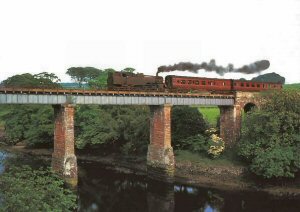
Finally, surviving embankments, the remnants of railway bridges and viaducts, are physical evidence of the role played by a once more extensive rail network in Galloway.
The next meeting of Kirkcudbright History Society will be on Wednesday January 13 2016 when Chris Rollie will explore the world of “Burns and Birds”.