Charles Oppenheimer RSA.

Those of us of a certain generation can remember one of our prominent local artists. Charles Oppenheimer, moved to Kirkcudbright from Manchester in 1909. Accompanied by his wife Connie, he initially resided at 14 High Street before relocating to Woodlea on the outskirts of town.

Charles Oppenheimer spent over half a century recording the local natural and built

Charles Oppenheimer; Art in Concrete; Harbour Cottage Trust.

environment, including a number of large canvases depicting the construction of the dams for the Galloway Power scheme in the early 1930s.

The Artist in the High Street

He was frequently observed painting at various locations in the area. His railway posters also brought his work to the attention of the public at large

He contributed significantly to the local community, serving as a town councillor and acting as the figurehead during the appeal to preserve the Harbour Cottage and convert it into an art gallery.

Although he is sometimes credited with the design of the Scottish Police cap badge this is not the case. In fact this was created in 1931 by the art master at Dumfries Academy, Robert Carnie.  He can however be credited with helping to devise the chequerboard that became their hat band.

The Police Hatband
Oppenheimer, Charles; A Sun-Dappled Pool; Dumfries and Galloway Council (Kirkcudbright);

Charles Oppenheimer died in Kirkcudbright Cottage Hospital on the 16th April 1961.Books for further reading about Oppenheimer can be found on https://www.kirkcudbrighthistorysociety.org.uk/publications/

Edward Atkinson Hornel

E.A. Hornel: Painter of Galloway’s Enchanted Landscapes

Edward Atkinson Hornel, born in Australia in 1864 to Scottish parents, was brought to Kirkcudbright as a toddler in 1866 and never truly left. A leading member of the Glasgow Boys, he trained in Edinburgh and Antwerp before settling back in the Stewartry to paint its woods, burns, and shores in a uniquely rich, decorative style.

Continue reading…

‘John MacTaggart: Out of Borgue and into the World’

John McTaggart, from Borgue, was a typical “lad o’ pairts” who had a distinguished international career as an engineer and author. Notably, he contributed to the construction of the Rideau Canal and wrote the “Galloway Encyclopaedia,” achievements that stand out among his many talents.

A Comparison of a dam as it was in 1841 and then in 2000.

In his presentation, Mike Duguid outlines the key events in John McTaggart’s life, including his association with the poet William Nicholson.

https://www.youtube.com/watch?v=FbhP_NKwXvE&t=1657s

‘Oot o the warld and inta …’is used in several places in Scotland, Langholm for one – Hugh Macdiarmid (Christopher Murray Grieve) used it of his birthplace, e.g. in one of his prose articles, ‘The Muckle Toon’; and it was appropriately used for Neil Armstrong when he visited his ancestral home in 1972.

Alan James


Margaret Montgomery: World War 2 Red Cross nurse

I had a query last year from Anne Sebba who was researching material for a book she was writing about the Auschwitz women’s orchestra. Many of the women had fond memories in Belsen of Margaret Montgomery.

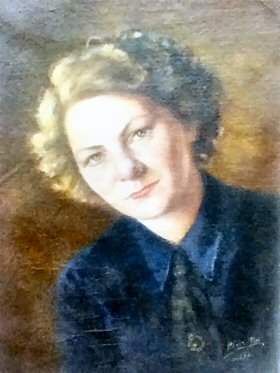
Portrait of Margaret Montgomery painted by Piri Hevizi

She managed to trace her through a portrait we had on our website. Because today is being marked as 80 years since the liberation of Auschwitz, I am basing this article on one written then about the remarkable life of this little lady with additional material given to us by the Stewartry Museum.

“Many of the women in the orchestra have fond memories in Belsen of a woman who helped in various ways with organising entertainment and more generally and who they thought was the sister of Monty – Bernard Montgomery. She was Margaret Montgomery but there seems to be no mention of Monty Having any sisters called Margaret. Searching on line today for a picture I found one on Kirkcudbright History Society. And would like to use it in my book but need to know who this woman was and were the orchestra women wrong about her having a famous brother? I would be most grateful for any help you can give me”.

Email received from Anne Sebba.

Continue reading…

Sir John Erskine: town benefactor

During his talk about Malcolm Caldwell which he gave in our December meeting Graham Finch showed a photo of a group of men which included Malcolm’s Father. Unfortunately, he could give us no further information about the image. Since the meeting David Devereux has identified the occasion as being when Sir John Erskine presented the Deacon Convener’s chain to the Trades and through further detective work we have managed to name all but one of the men in the group. To find out more about Sir John Erskine and the men in the group click on this link Sir John Erskine

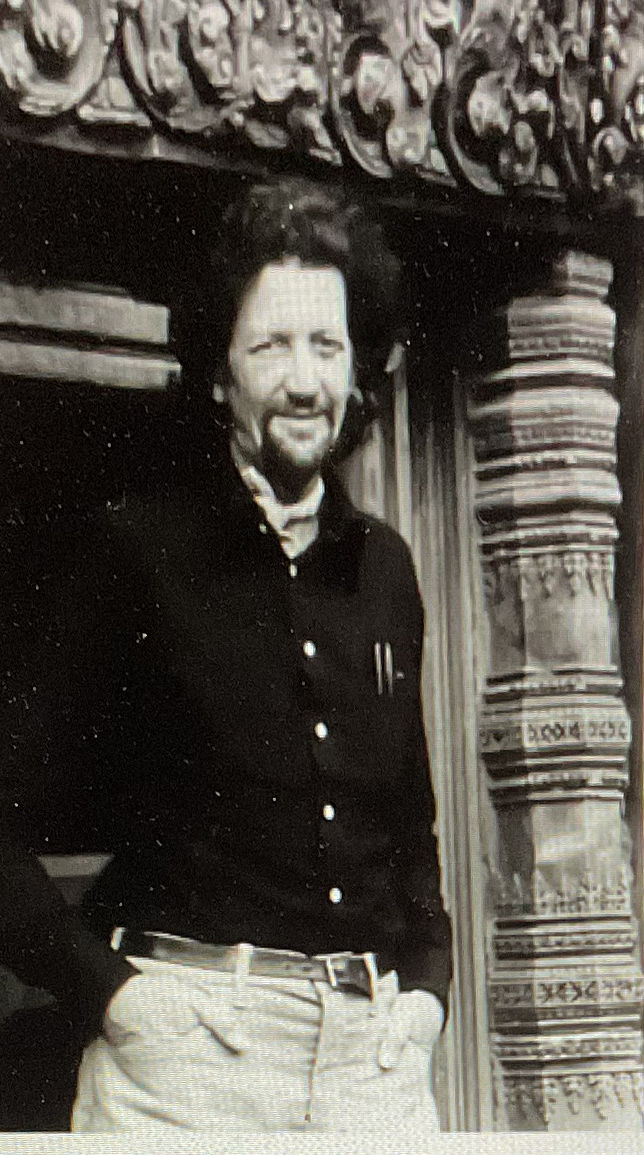
Malcolm Caldwell: Kirkcudbright Dux; Cambodian Death

The short life of Malcolm Caldwell was the subject of our December meeting. A Dux at the Academy he became a consistent critic of American foreign policy, a campaigner for Asian communist socialist movements and a supporter of the Khmer Rouge. He was murdered a few hours after meeting Pol Pot in Cambodia, though who was responsible for the murder remains unknown. Graham Finch and Gerry Hassan ably took us through the various aspects of his fascinating life and death. For those who missed the meeting the link to the presentation is https://www.youtube.com/watch?v=6F015jPuiuo&t=27s