In an article contributed to the Galloway News in 2010, I described the Barque Rory O’More, which was built in Kirkcudbright in 1842 and at 296 tons was the largest vessel known to have been built in the town. The main purpose of my article however was to accompany the magnificent illustration of a painting of Rory O’More that I had found in the National Maritime Museum in Greenwich. It was then the only illustration I had ever seen of a Kirkcudbright-built ship, apart from a tiny pencil sketch of the schooner Prince of Denmark which was reproduced earlier this year in my book describing the history of that well-travelled little vessel.
Although the painting of Rory O’More is unsigned, Daniel Shackleton, Kirkcudbright’s well known fine art expert quickly suggested that it might have been painted by Joseph Heard, an accomplished marine artist who was based in Liverpool between 1826 and 1857. Last week, I stumbled upon the catalogue of a sale of paintings by Joseph Heard, which took place in Bonhams Auction House in April of this year. Among the items offered for sale was a splendid oil painting of the inwardbound barque John Tomkinson of Liverpool, boarding her pilot in the Formby Channel of the River Mersey in 1840.
At the time of her completion in 1840, the barque John Tomkinson, at 260 tons, was the largest ship known to have been built in Kirkcudbright, and her launching was reported in the Dumfries Times of 29th September 1840, as follows:
On Saturday forenoon, a splendid new vessel, the John Tomkinson, of about 500 tons burthen was launched from the building yard of Messrs Jenkinson and McEwen. She made a most majestic plunge into her new element, and although the rain fell in torrents, thousands of spectators patiently awaited to witness the imposing and interesting spectacle.
The reporter’s estimate of her tonnage was probably as optimistic as his perception of the size of the crowd that assembled to await the launching, but his account goes some way towards conveying the sense of excitement there must have been in Kirkcudbright and the surrounding area at such a significant event in the town’s maritime history. The launch of Rory O’More only two years later however quickly took away John Tomkinson’s status as the largest vessel built in the town.
John Tomkinson was built for Rimmer and Co of Liverpool and sailed from there on 19th January 1841, for Batavia and Singapore under the command of Captain Hutchinson. In July 1841 she and six other vessels were dismasted off Canton during a typhoon, but she returned safely to Liverpool, and by 16th August was bound from Deal to Bombay. In 1843, Lloyd’s register of shipping recorded a change of ownership to that of W. Hay of Sunderland, and a new master, Captain Rhynas. John Tomkinson arrived at Bombay on 29th January 1843, sailing for China via Singapore on 26th March. Her cargo is not recorded but she had three passengers, Major Aldri, Captain Gifford and Colin Junor esq. Her ownership had reverted to that of Rimmer and Co., and her former Captain Hutchinson was once more in command.
On 2nd March 1844 she returned to the United Kingdom, and was reported as arriving off the Downs, from China. In May of 1844 she then sailed for Hobart, Tasmania with government stores and one passenger, arriving safely on 30th August 1844.
- Fitzgerald, Tailor and Clothier
begs to inform his customers and the public that he has received, ex John Tomkinson,
a choice and select assortment of spring and summer goods selected to or, and
comprising every description of goods requisite for a large and fashionable business, and will upon inspection be found superior to any hitherto imported. No1 Elizabeth Street, September 13th 1844
Colonial Times, Hobart 17th September 1844.
For Valparaiso Direct
The A1 Bark
John Tomkinson
300 tons register, D Hutchinson Commander will sail for the above port on Wed 18th inst. For freight or passage, apply to Captain Hutchinson on board, or to New Wharf. September 10th Askin Morrison
Hobart Town Courier 14th September 1844
On 24th September 1844, John Tomkinson sailed for Valparaiso to take on a rather less attractive cargo of guano (bird lime) bound for the British market. Apart from one voyage to the West Indies in1847, carrying equipment for a sugar plantation, she was probably in the guano trade for the rest of her days, and is last recorded in Lloyds Register in 1856.
The fact that both Rory O’More and her near sister ship John Tomkinson were both built in Kirkcudbright and based in Liverpool make it seem highly likely that Daniel Shackleton’s opinion is correct, and that both ships were painted by Joseph Heard. Joseph Heard was born in Egremont in 1799, and after a short stay in London, moved with his brother and fellow artist Isaac, to Liverpool where they shared a studio. Both were well known and highly respected marine artists, but Joseph specialised in Marine paintings whereas Isaac also undertook commissions for portraiture.
It is exciting, not only to have more details of the astonishing careers of vessels built in Kirkcudbright, but also to know that they were vessels of sufficient substance, character and repute to merit marine portraiture by an artist of the calibre of Joseph Heard. The fact that the only three ships built in Kirkcudbright of which there are illustrations, should all be in Tasmania in the mid 19th century is also strangely impressive, and a testament to the quality of Kirkcudbright’s shipbuilders.
(copyright David R. Collin, October 2013.)
(first appeared in Galloway News)

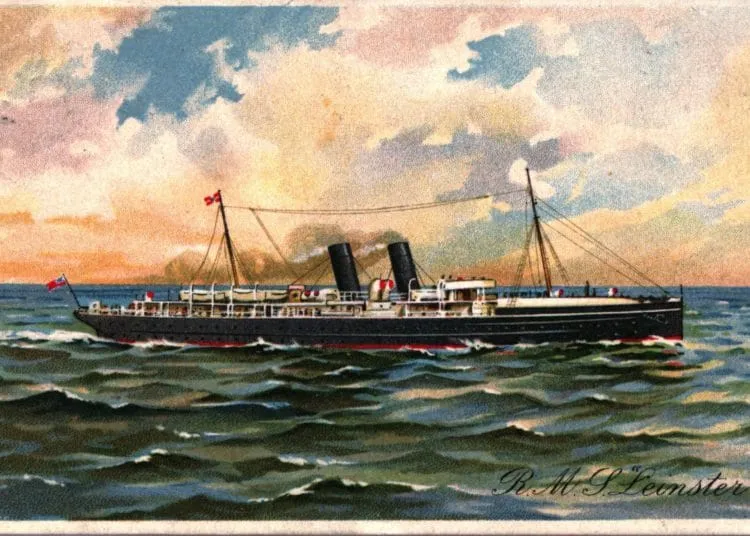 this sinking by a German submarine whose bodies were found locally. The ship, traveling from Kingstown (now Dun Laoghaire) to Holyhead Anglesey, carried 771 people, including 76 crew, 22 Dublin postal workers, and 180 civilian passengers from Britain and Ireland. The graves have been marked
 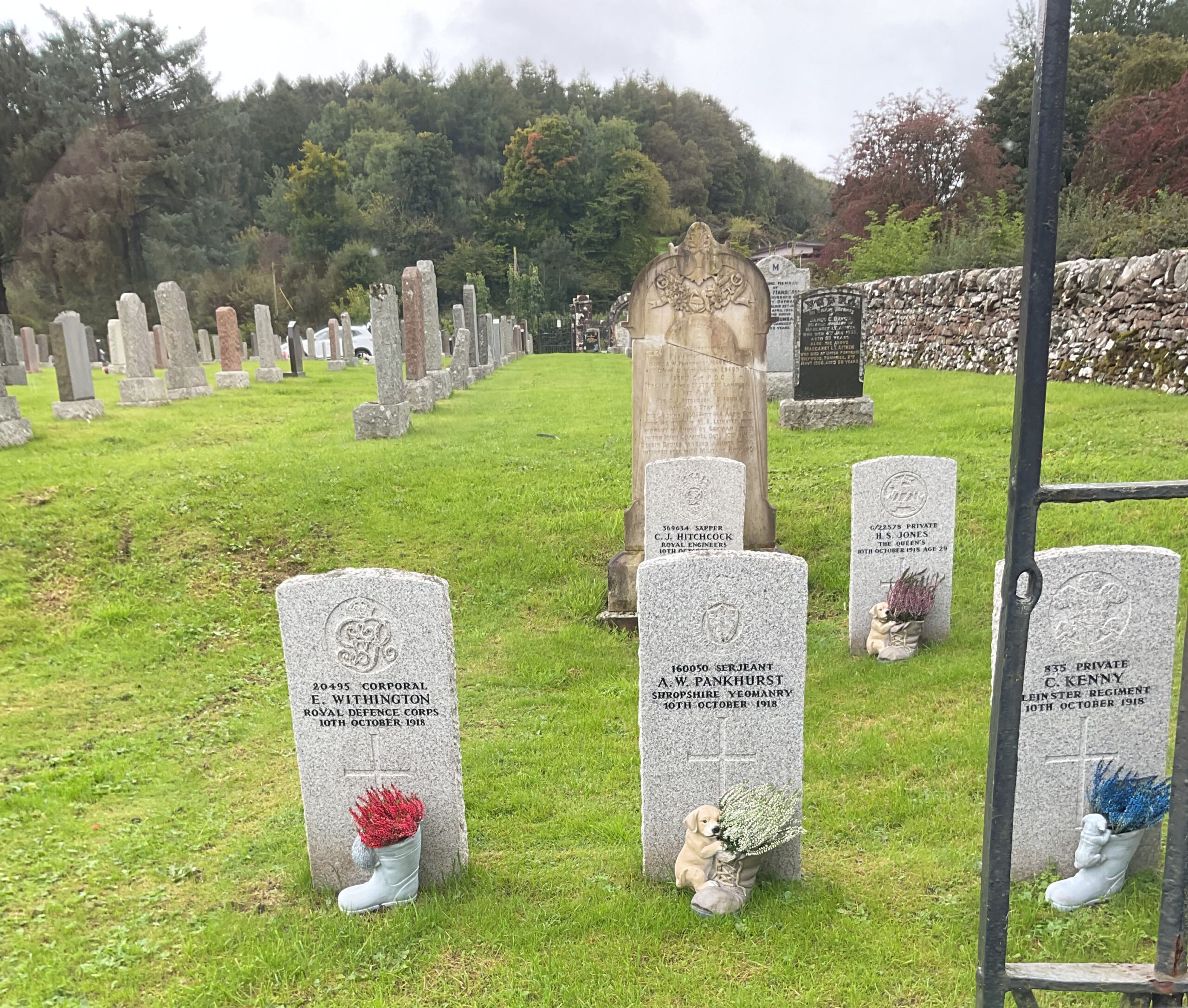 this year by someone with pots of heather. For more information about the tragedy go to https://yorkshirebylines.co.uk/news/world/sinking-of-rms-leinster-tragedy-in-irish-sea/
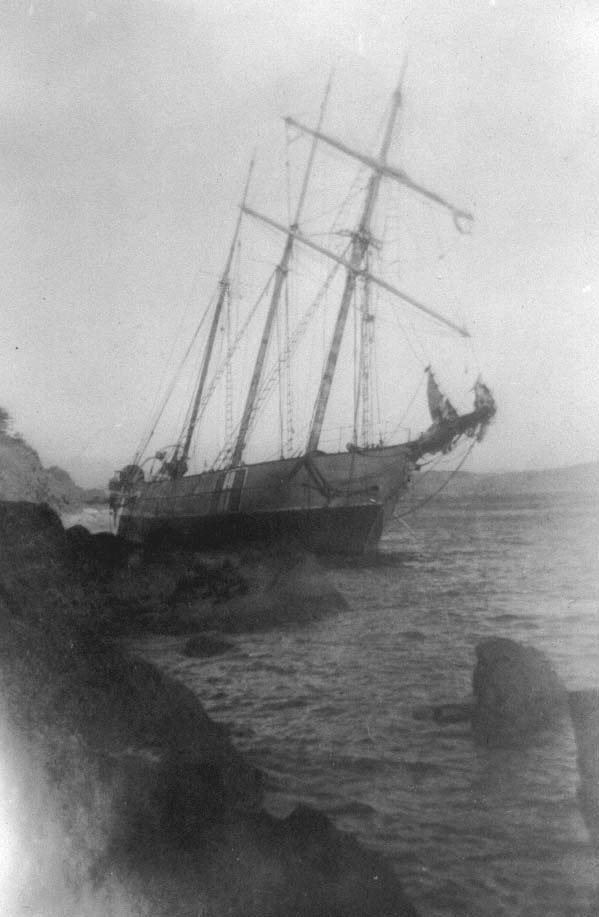
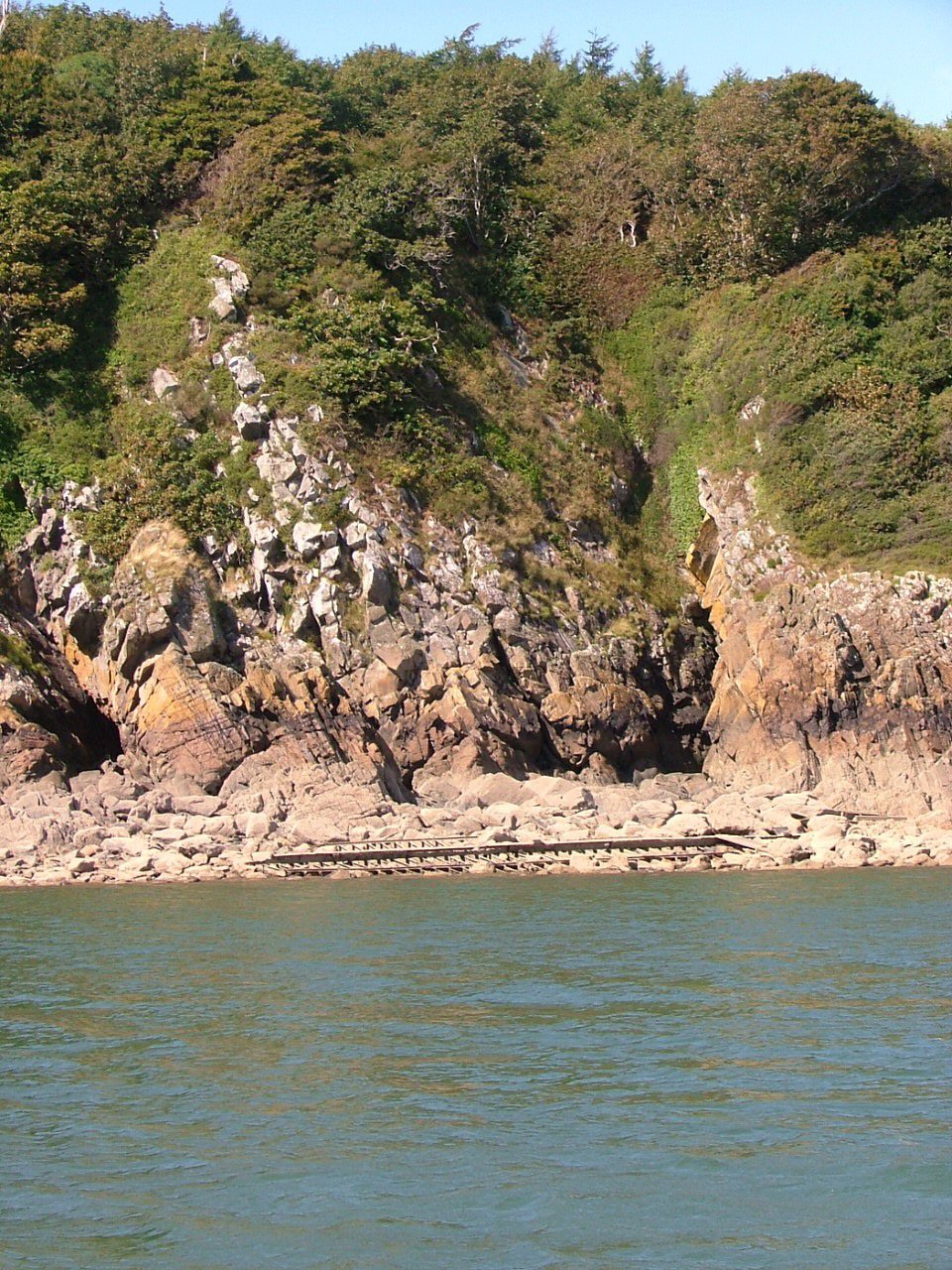
 Almost everyone now uses the name “Flint Bay” and a few may wonder how it got its name and why its stony beach is comprised of such an abundance of flint. The mystery is compounded when study of the older Ordnance Survey maps referred to previously, reveals that the official name of Flint Bay is the Witchwife’s Haven. Flint does not seem to my untutored eye to be a feature of local geology, though excavations in local caves at Torrs and Borness have yielded some flint artefacts.