
In Scotland, the name of a street could hint at the status of the place around it. Many burghs developed a High Street at their centre: the broad route where markets gathered, proclamations were read, and civic life unfolded. Smaller villages often had a Main Street instead, a more practical name for the settlement’s principal road. The distinction was never absolute, but in places like Kirkcudbright the High Street still reflects the town’s long history as a royal burgh.
Chartered in 1455, Kirkcudbright held rights that smaller settlements did not: it could hold markets and fairs, levy tolls, and administer burgh law through its own council and courts. Much of that activity centred on the High Street, where merchants traded, notices were proclaimed, and townspeople gathered beneath the shadow of the Tolbooth and Market Cross.
On the ground, that meant markets existed by right, not by permission. When Kirkcudbright’s weekly market met, and when the big Michaelmas Fair rolled round each September, the L-shaped High Street, that always caught the wind off the Dee, filled with the business of the whole Stewartry. Farmers drove in cattle and sheep. Fish came up from the harbour. Weavers, shoemakers, and fleshers set out stalls. Deals were struck, debts were settled, and labourers were hired for the year ahead. The tollbooth clerk noted the dues, because trade here paid for the burgh’s upkeep.
The buildings told the same story. From the 1620s, the Tolbooth anchored the street. It was jail in the
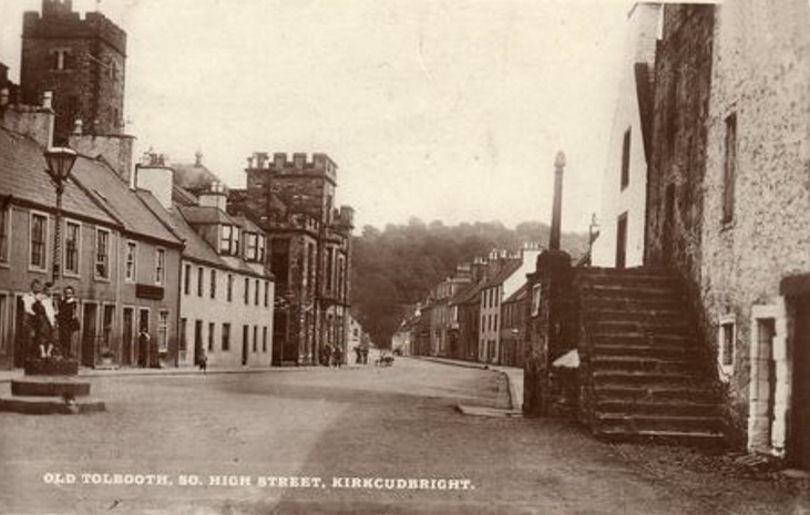
basement, courtroom on the main floor, and council chamber above. If you broke burgh law, you were tried and locked up in the same building where the bailies set the price of ale the next morning. A short walk away stood the Market Cross. This was not decoration. It was the legal heart of the burgh. Proclamations read at the Cross had force of law. Contracts were witnessed there. Penitents did public penance in its shadow. When the handbell rang and the town officer cried “Oyez,” the street stopped to listen.
Behind the formal frontages, the High Street worked hard. Closes ran back from the street line to tenements, brewhouses, workshops, and yards. These were not quaint alleys. They were packed with households, trades, and noise. Families drew their water from public pumps like the one at Spout Close.
The old “Doocots” and other gabled houses were built side-on to the street, a burgh building pattern that
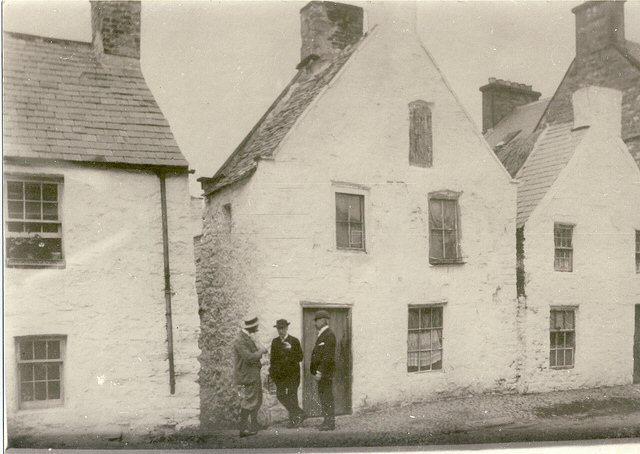
packed more properties onto the valuable frontage. You lived above your work, and your work faced the High Street.
A Main Street marked a different world entirely. Villages, fermtouns, and kirktons had a main route through the settlement, but they lacked a royal charter. No charter meant no burgh council, no burgh court, and no right to hold official markets. Trade was local and low-key. Disputes went to the baron’s court or the kirk session, not to a Tolbooth. Life was domestic first, civic