Our August2 Newsletter can be accessed here August 2 Newsletter

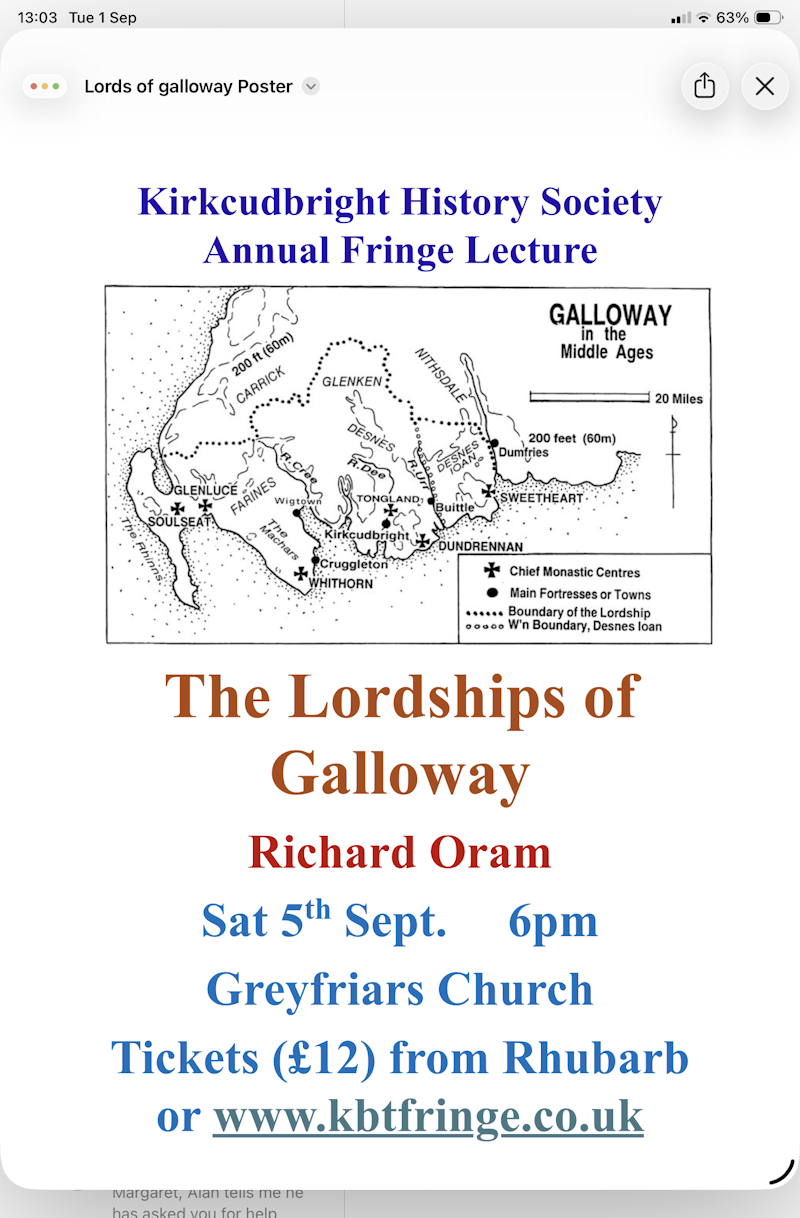
The Society is going to be busy over the Fringe weekend with 4 walks and a lecture. Please note the walk information is at the end of the posters.


Jim Bell has been posting articles on Facebook which cover a lot of local history. He has kindly allowed us to copy these and post them on our website. They continue to be very varied and interesting. They can be accessed here. https://www.kirkcudbrighthistorysociety.org.uk/category/featured-article/jim-bell-blog/
Cochran Hall, Kirkcudbright Academy.
If you’ve ever spent time at Kirkcudbright Academy, or attended a local event in the town, you’ll almost 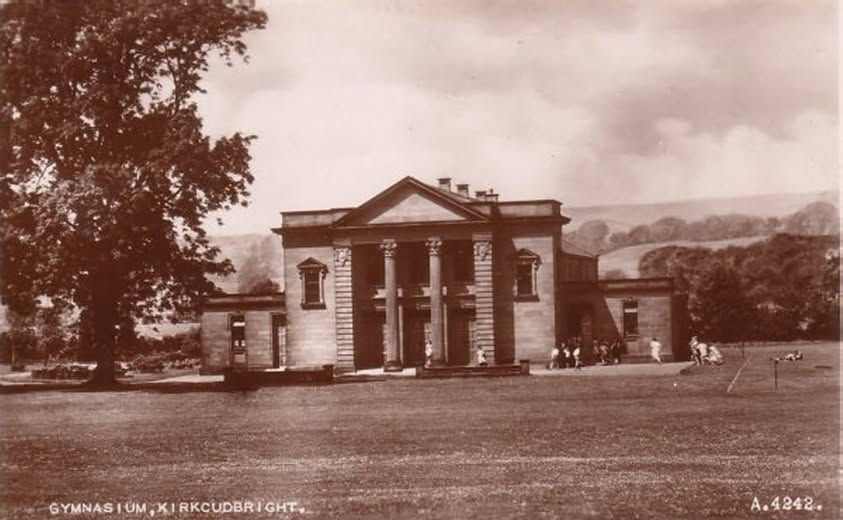 certainly be familiar with the Cochran Hall. It’s a key part of the school’s footprint, serving as everything from an examination room and sports venue to a hall for community gatherings, but the story behind its name belongs to a world far from the Stewartry. The hall owes its existence to Thomas Cochran, an American investment banker whose generosity reconnected him with his family’s Scottish roots.
Born in St. Paul, Minnesota, in 1871, Thomas Cochran rose through the ranks of American finance to become a partner at the prestigious New York firm J.P. Morgan and Company. Despite his life being firmly rooted across the Atlantic, his family tree stretched directly back to the Stewartry, where his ancestors had lived generations earlier. He wasn’t someone who regularly walked the streets of the town, yet his lineage meant that when Kirkcudbright needed support, his name was high on the list of people to contact.
Kirkcudbright Academy underwent a major period of modernisation and expansion in the 1920s to cope with its growing role as the main secondary school for the surrounding district. The Kirkcudbright artist Edward Atkinson Hornel, who was himself a former pupil, sat on the local education committee and took an active role in raising funds for the project.
Hornel wasn’t hesitant about looking further afield, and among those he contacted was Thomas Cochran in New York, whose family had left the Stewartry generations earlier.
When Hornel’s appeal reached Cochran, the banker responded with remarkable philanthropy. He offered to finance a brand-new facility for the school as a lasting memorial to his Kirkcudbright forefathers. Designed
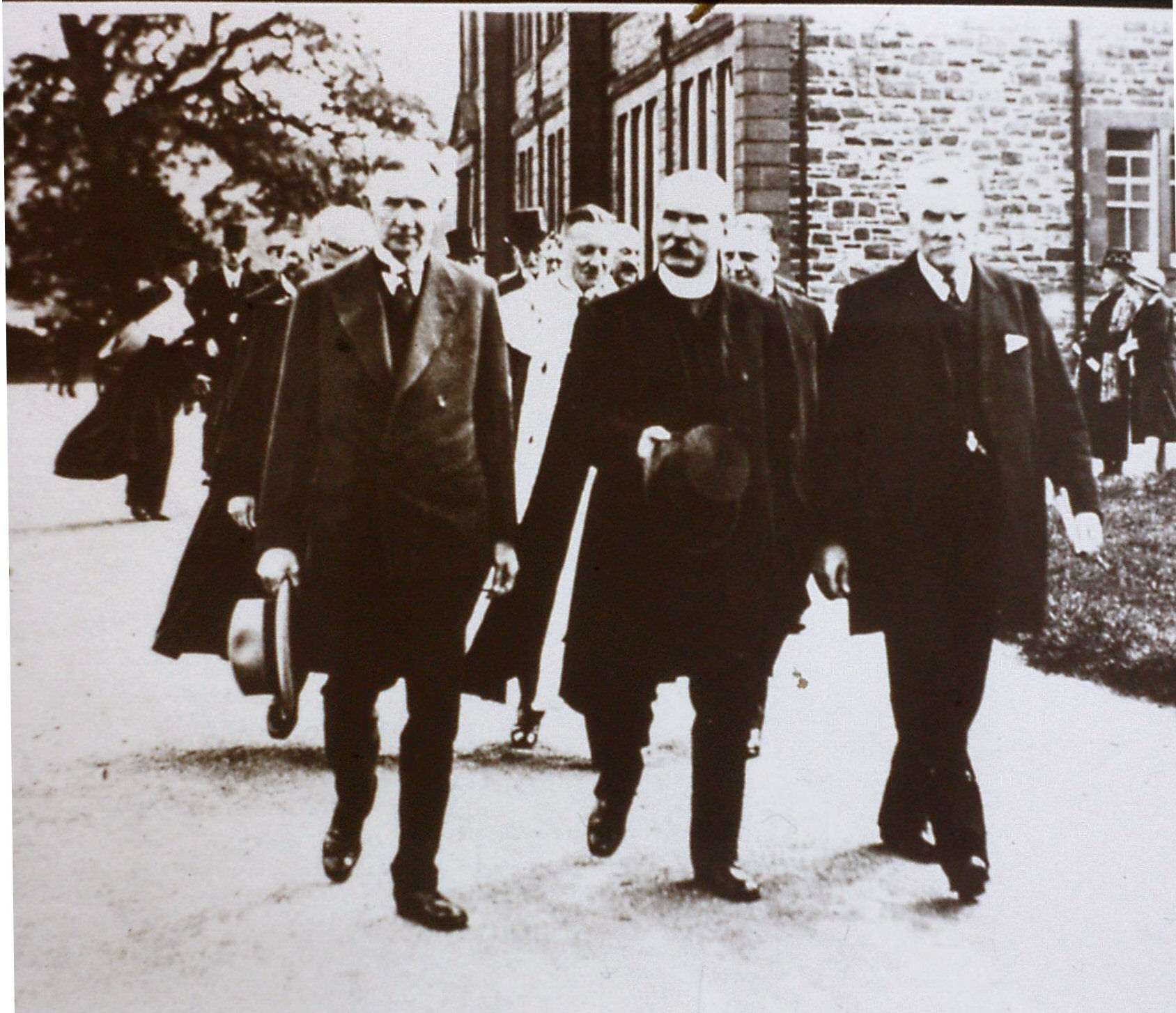
by the architect W.A. McKinnel, the building opened in 1931 as the Cochran Memorial Gymnasium. It was considered a fine addition to the academy, providing physical education facilities that were well ahead of their time for a rural school in the region.
Over the decades, the building expanded its role to become the versatile assembly space known today as the Cochran Hall. It’s played host to generations of school events, theatrical performances, and long-standing community traditions such as the annual Candlemas Ball. Though Cochran passed away in 1936 having spent his life in the United States, his gift ensured that his family name would remain stitched into the social and educational life of Kirkcudbright
This article was posted on Kirkcudbright RNLI Lifeboat Station’s Facebook page on 25/08/2026
Kirkcudbright RNLI’s ILB Sheila Stenhouse B- 814 – “She deserves a medal”
The lifeboat has performed amazingly during the last 20 months she has been moored in the river while the boathouse was being extended and renovated. These are the words of Kirkcudbright RNLI’s mechanic John Collins who has maintained the Sheila Stenhouse for 20 years.
Now the oldest Atlantic 85 in the RNLI Fleet this boat has served the coast around the Solway for two decades. As Kirkcudbright crew take over the wonderful new boathouse facility the current boat has been retired and will be replaced with a new Atlantic 85.
When she first came on service she was one of the earliest Atlantic 85’s in Scotland. On 13 October 2007 she was named at Kirkcudbright Harbour by Mrs Carol Richmond, in memory of her late aunt, whose bequest had funded the lifeboat. Like many boats in the RNLI fleet she was funded by the generosity of donors. The Sheila Stenhouse replaced the Atlantic 21 Peter and Grace Ewing.
The service record of the Sheila Stenhouse was
197 launches
198 people assisted
93 craft assisted
25% of her activity was to assist sailing boats.
The Atlantic 85 was an improvement on the former Atlantic 21. The Sheila Stenhouse was capable of speeds
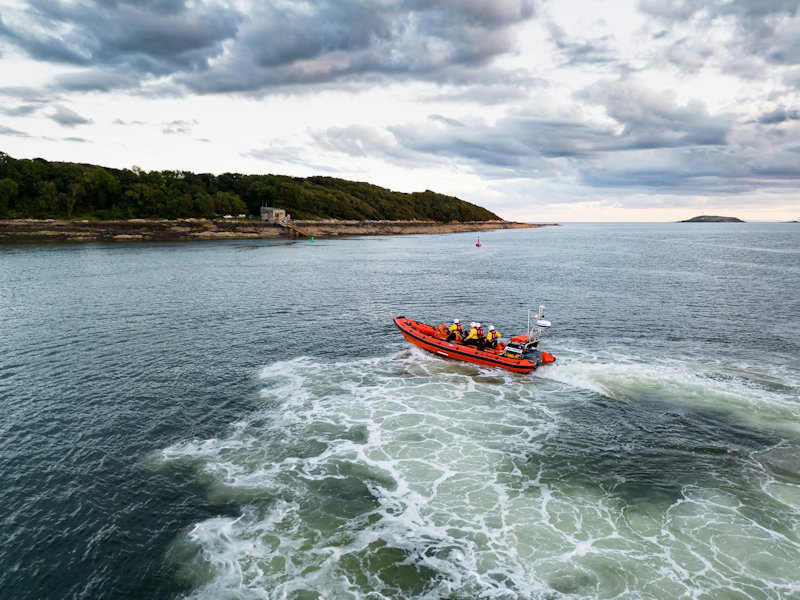
up to 35 knots the Atlantic 85 could launch in daylight in force 7 conditions and at night in a force 6.
As the numbers above testify the Sheila Stenhouse has been involved in many and varied call outs. Sometimes being turned back even before launching and at other times launching in rough dangerous conditions and being at sea for many hours.
She has covered cliff rescues, capsized boats, engine failures, missing person searches, recovery of vessels run aground. Numerous kayakers, swimmers, fishermen and people stranded. Most shouts have good outcomes but the crew’s thoughts often turn to the more tragic events. However the volunteer crew can be very proud of the more than 200 people that have been assisted when needing help.
Through all this the Sheila Stenhouse, given as a generous gift, has been an excellent lifeboat and will be missed.
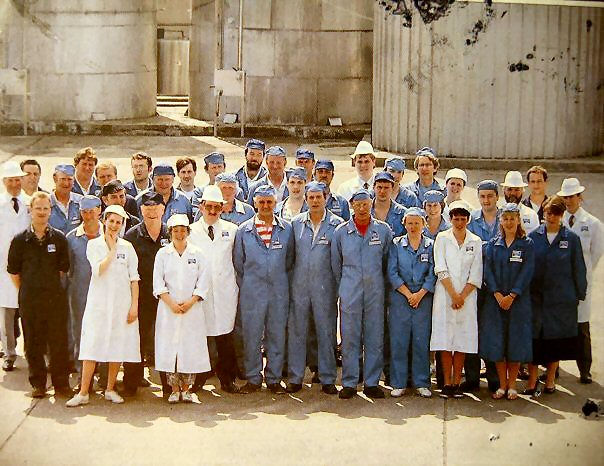
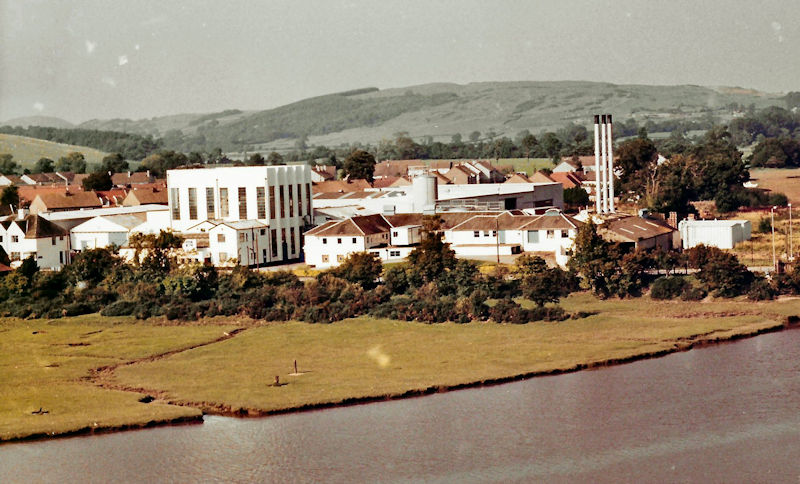
A posting on Facebook has raised some interest in Kirkcudbright Creamery. For information about the Factory we have several texts on this site. Read about the opening day and also a description of its heyday by Billy McKeand. https://www.kirkcudbrighthistorysociety.org.uk/news/the-rise-and-fall-of-kirkcudbright-creamery/
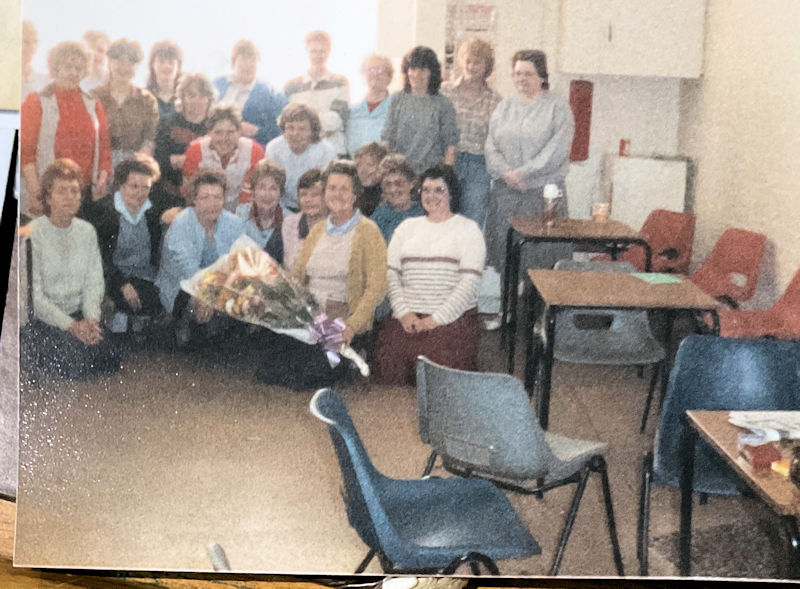
 Jane (Houston) Young has given us these photos of the Knitting Factory employees in 1987. Johnny Proudlock has improved one image.
Border Life
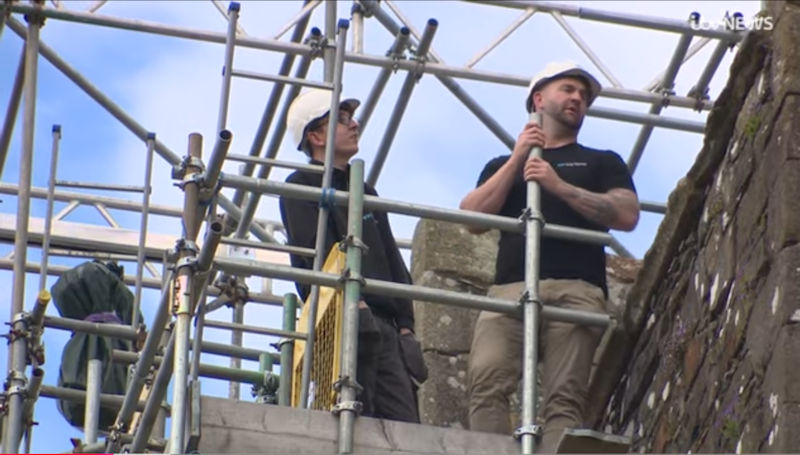
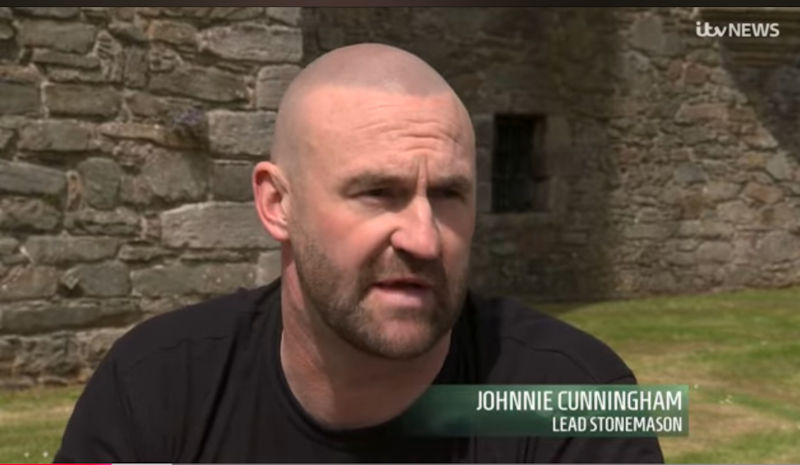
Over the last few years we have all watched work being done on MacLellan’s Castle. In this programme local chap Jonny Cunningham explains the skills involved in restoring the Castle’s stonework. https://www.youtube.com/watch?v=_F8UpXoEfEM