
This article was written following an appeal to trace the family of an officer killed in the WW1 being successfully  researched. Further items relating to the story have been attached at the end. The Society is grateful to Mrs Aileen Gardiner and family for their help with the research, their donation of family items to the Stewartry Museum and their permission to us publishing the information. Montgomery Letter research
Further information including the letter in full and information about Bertram’s parents are below.
The letter and envelope followed by the transcription by Maria Roberts.

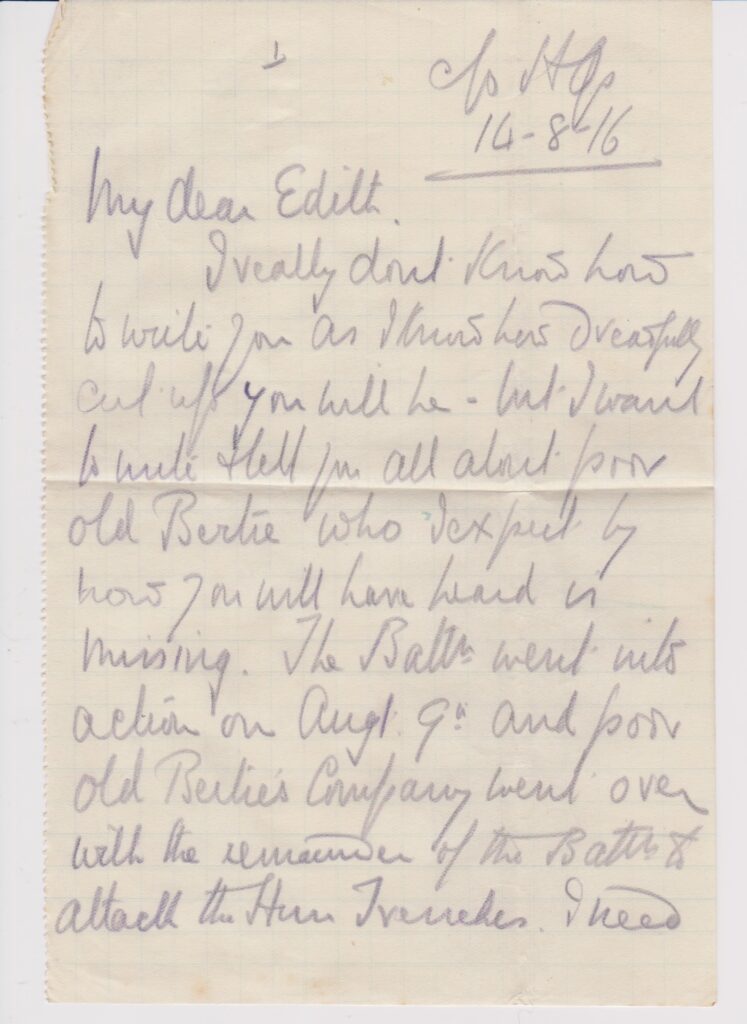


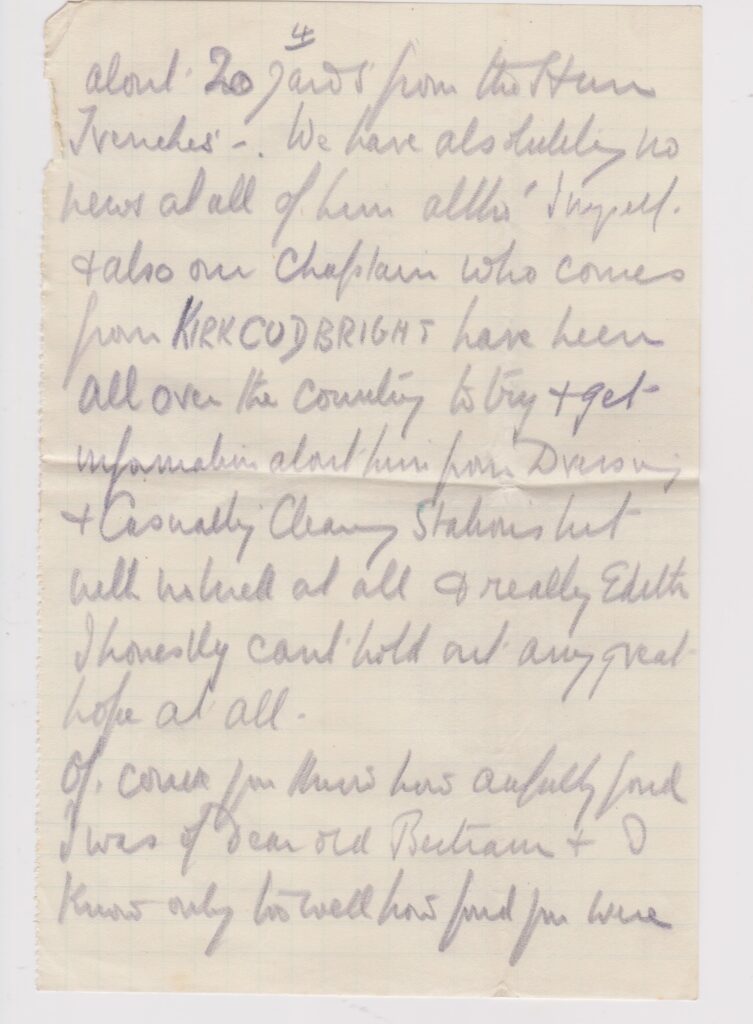
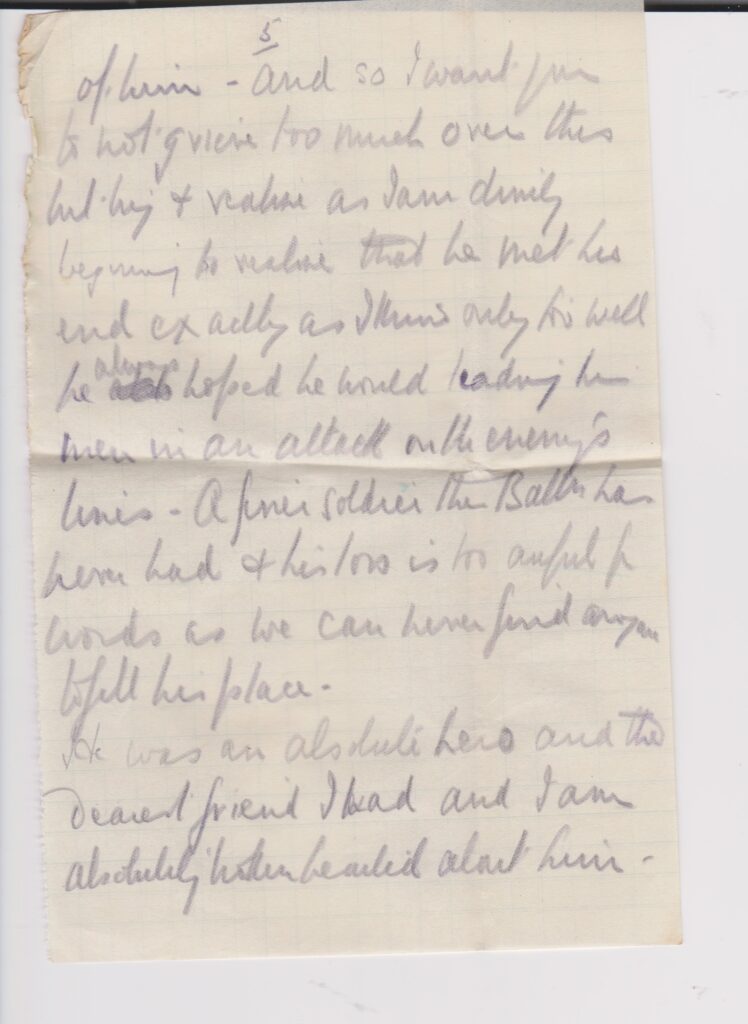
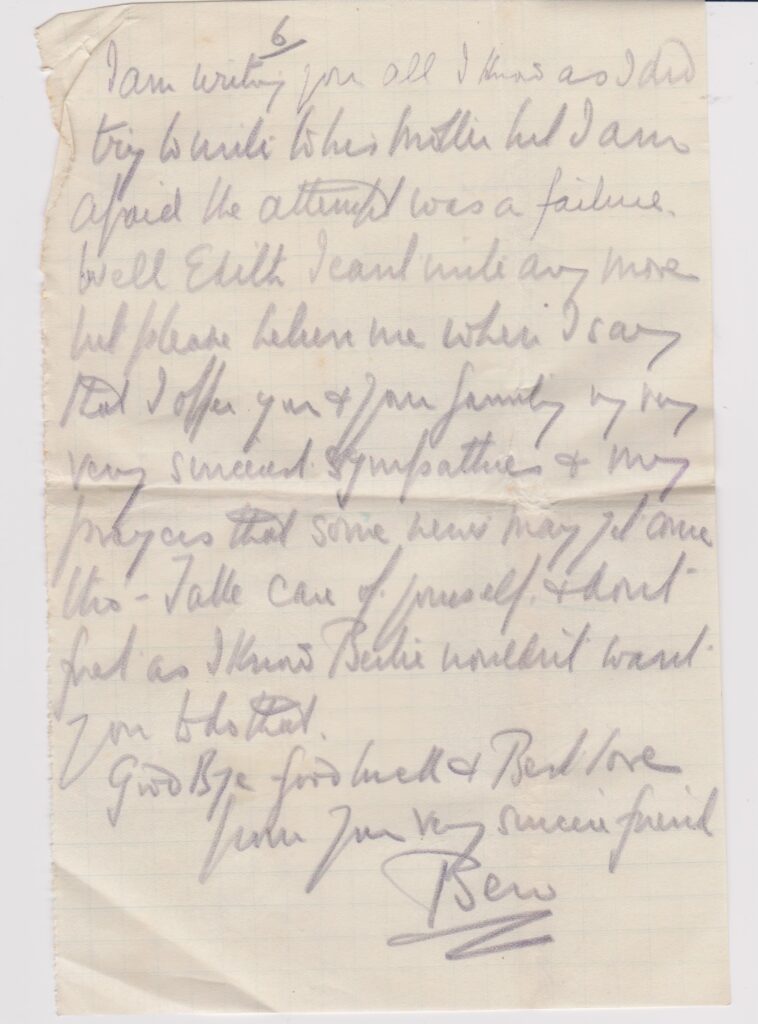
The addressee of the letter is Edith Montgomery who was Hugh Bertram Montgomery’s cousin.
Transcription
c/o HQ
14 8 16
My dear Edith
I really don’t know how to write you as I know how dreadfully cut up you will be but I want to write & tell you all about poor old Bertie who I expect by now you will have heard is missing. The Battln went into action on Augt 9th and poor old Bertie’s Company went over with the remainder of the Battln to attack the Hun Trenches. I need hardly say that Bertie was absolutely magnificent and everyone who saw him said he was absolutely fearless & behaved as if shells and bullets were thousands of miles away. He led his Company as if he was on parade & when they were all forced to retire he called his men again & led them to the attack a second time. This time, or as far as I can find out I think it was the second time, he was wounded very badly in the right side & was seen to fall but he at once lay on his left side waving his right arm over his head & cheering & encouraging his men on. When a man went to see if he could do anything for him Bertie refused to allow any one to help him and told the man to go on & leave him and carry on the attack. We were again forced to retire and no one has seen anything of him since altho’ Patrols went out all over the ground that night & the night after to search for wounded. He fell about 20 yards from the Hun Trenches. We have absolutely no news at all of him altho’ I myself & also our Chaplain who comes from KIRKCUDBRIGHT have been all over the country to try and get information about him from Dressing & Casualty Clearing Stations but with no luck at all & really Edith I honestly can’t hold out any great hope at all.
Of course you know how awfully fond I was of dear old Bertie & I know only too well how fond you were of him – and so I want you to not grieve too much over this but try & realise as I am dimly beginning to realise that he met his end exactly as I know only too well he always hoped he would leading his men in an attack on the enemy’s lines. A finer soldier the Battln has never had & his loss is too awful for words as we can never find anyone to fill his place.
He was an absolute hero and the dearest friend I had and I am absolutely brokenhearted about him.
I am writing you all I know as I did try to write to his Mother but I am afraid the attempt was a failure. Well Edith I can’t write any more but please believe me when I say that I offer you & your family my very very sincerest sympathy & my prayers that some news may yet come thro. Take care of yourself & don’t fret as I know Bertie wouldn’t want you to do that.
Good Bye good luck and Best love
From your very sincere friend
Ben
Along with the letter Mrs Aileen Gardiner has donated the following items to the Stewartry Museum along with information about his parents.
Memorial plaques
Soon after the war ended, the British government began the production of individually- named memorial plaques to be sent out to the next of kin – the closest living relative – of every serviceman and woman who had lost their lives. Bereaved families received them through the post in a cardboard envelope, with a printed message from the King. Commemorative scrolls were also sent
Bertram’s memorial plaque and scroll.


Bertram has no known grave but is remembered on the family gravestone at Galtway Kirkyard and on the Theipval Memorial at the Somme.
Gravestone and Thiepval Memorial


Bertram’s family.
Hugh Bertram Montgomery was the son of William and Janet Montgomery, The Banks, Kirkcudbright. His Father was well known locally and was presented with portraits of himself and his wife which are also in the museum. He was also presented in 1910 with gifts by local farmers in “recognition of his great service to the farming world”.
Portraits and newspaper cutting

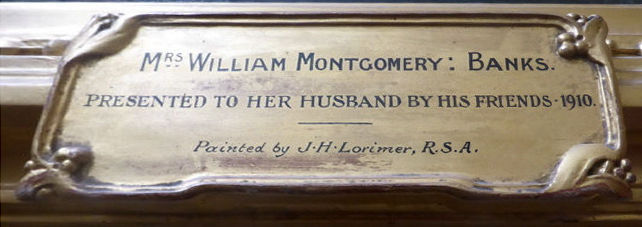

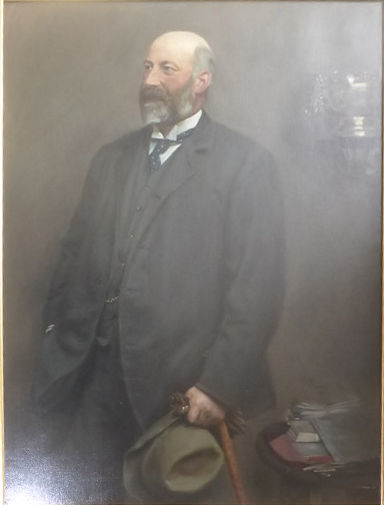
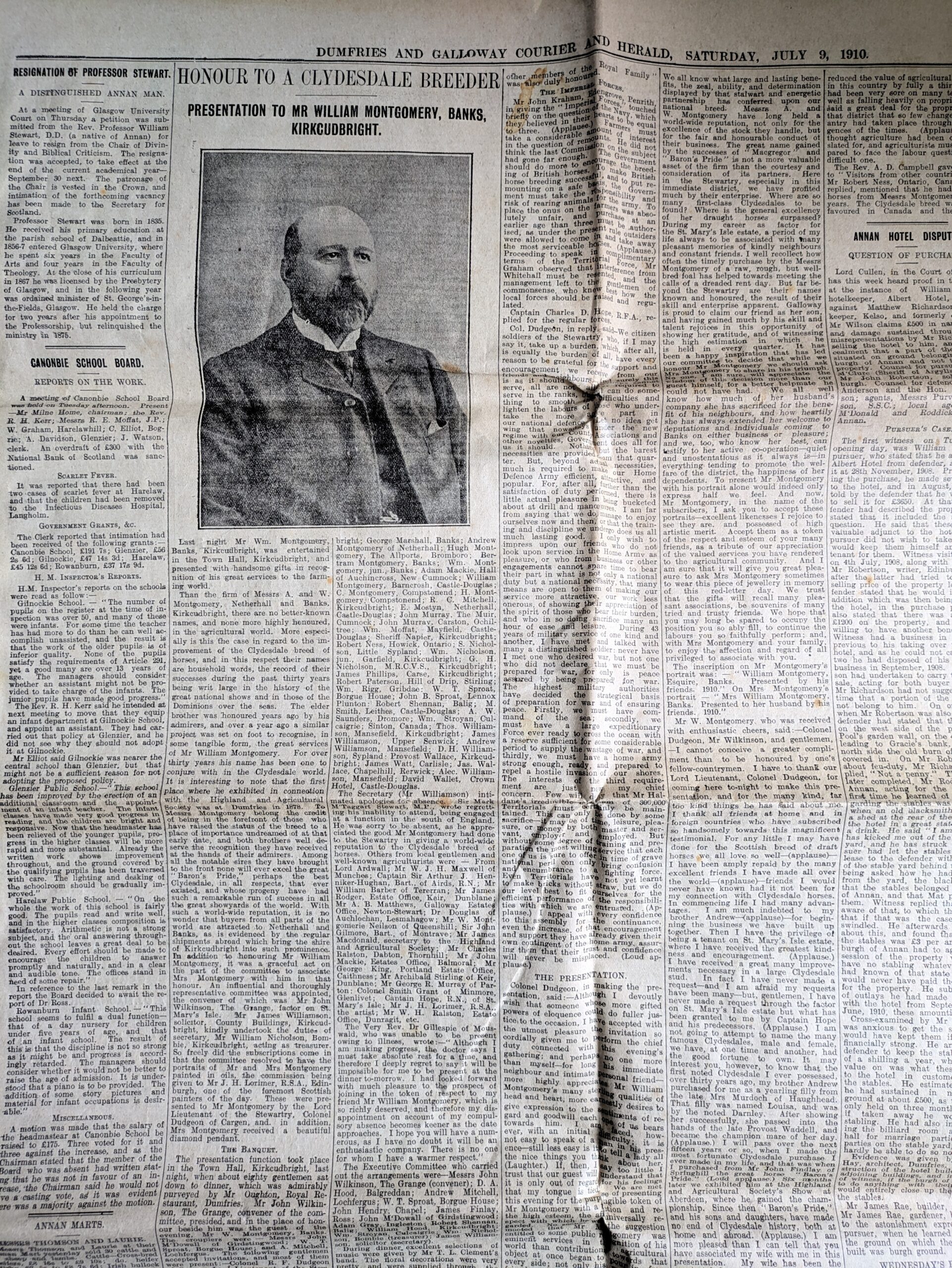
Ref: “We will remember them. Kirkcudbright’s Sons 1914-1918” by Ian Devlin was instrumental in us tracing the family.
The hunt for information about the Chaplain mentioned in the letter.
Dr David Devereux has contributed the following.
“Regarding the chaplain referred to in the Montgomery letter, there is the usual uncertainty about whether it is Kbt town or county referred to. However, if we assume the town, then a google search ‘Kirkcudbright Chaplain First World War’ produces the names of the Rev William Barclay, minister of the Parish Church 1914-26, and the Rev. Joseph McHardy, RC parish priest 1905-32. Both served as army chaplains, and Father McHardy was in fact awarded the Military Cross.
These are two possibilities and there may well be more. Montgomery served in the King’s Liverpool Scottish regiment. The regiment has a website, but not as far as I could find, a list of chaplains. However, both of these Kirkcudbright chaplains would probably know Montgomery by sight and consequently might well have joined in a search for his body. If you could establish if either clergymen were serving in the same area when Mongomery was killed, that might be good circumstantial evidence, but I don’t know if sufficient records exist for that. McHardy served on the Somme as did Montgomery, but I can’t find much on Rev. Barclay’s war service. He did however conduct the Service of Remembrance and dedicated the War Memorial in 1921.
Here’s a section on Father McHardy from the Catholic Church’s website….
The longest serving priest at St. Andrew’s & St. Cuthbert’s was Monsignor Joseph McHardy who came in 1905 and stayed till 1932. During World War I he was an Army Chaplain and was wounded at the Somme. No longer fit for active service he was awarded the Military Cross for distinguished service and on his return was given the Freedom of the Royal Burgh of Kirkcudbright. He is the priest standing at the door of the presbytery in this old photograph of the church.
…and from the Remembering Old Ayr Facebook page
The grave to the right is of Joseph McHardy, in WW1 he left his position as a priest in Kirkcudbright and joined the Tyneside Scottish as an Army Padre. They were a Pal’s Battalion and he was a much valued member of the unit.
On 1 July 1916, the first day of the Somme, the battalion were played into battle by their piper near the village of La Boisselle. They eventually encountered a “killing ground” near Marsh Valley. On that horrendous day of slaughter the Tyneside Scottish suffered the worst losses of any brigade.
In the following week’s Joseph McHardy would write letters and officiate at possibly hundreds of funerals of his lads battalion. His value to the CWGC was that he would record the name, rank and serial number for each of the fallen identified and place it in an inverted bottle over the grave. Over 100 years later, many of the graves identified are because of the valuable work these padres did.
He was eventually awarded the Military Cross, these were not handed out for compassionate work but for acts of great bravery. A typical example would be, on hearing the distressed cry of a soldier in no man’s land, going out to provide first aid and solace.”