
1st of January 1858.
‘Sirs, the inhabitants of Kirkcudbright have for upwards of half a century been tantalized with prospect of the erection of a bridge over the River at Kirkcudbright. When I was a boy, I well remember that when a candidate for the Stewartry appeared in the field, it was given out that he would procure us a bridge, and the running of the Mail Coach viz Kirkcudbright. These were then the grand desiderates of the town; Member after Member was sent to Parliament, but the bridge was lost sight of, except when some humane and public spirited gentleman like the late Mr McCulloch of Ardwall, shocked by the ever-recurring sacrifice of human life at our abominable Ferry (it is exceeded in this respect only by the Ferry at Creetown), attempted to rouse the Road Trustees of the Stewartry to a feeling of the clamant demand for a bridge. Ardwall’s agitation was received in the County meetings very much in the same manner as was the late Mr McCulloch of Barholm’s half-yearly motion for a petition to the House of Commons for the repeal of the Corn Laws; but by
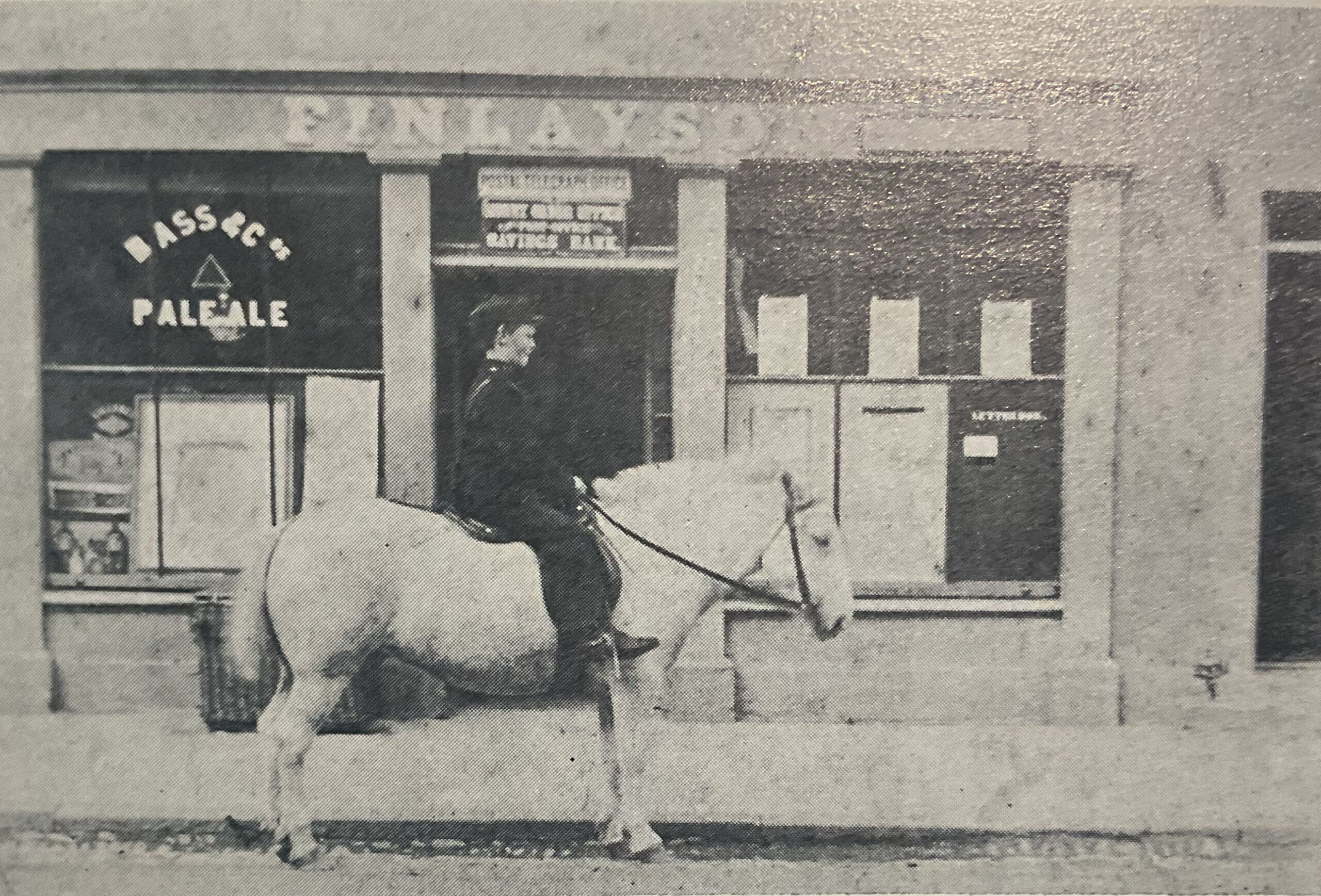
earnestness and perseverance, he succeeded in getting the late Mr Jardine brought out to make a survey and inspection for a site. Mr Jardine made his report, but nothing followed on it excepting much grumbling at the payment of the expense of it. Ardwall, wearied out and displeased, ceased troubling, declaring that he at least would, like many others, avoid the Ferry, and take the circuitous route by way of Tongland and Tarff Bridges in all time coming. There is now a prospect of a railway, this circumstance induces me to address you. I am not wild on the subject of a railway. I do not imagine, like some persons, that the obtaining a railway is to convert Kirkcudbright into a miniature Liverpool or Glasgow. One good the formation of a railway to Kirkcudbright will effect is the erection of a bridge at Kirkcudbright; another is the making of suitable breastwork along the river side for the accommodation of our splendid steamer, where she may, with safety and even dignity, take her berth, instead of twining and twisting herself (at the risk of breaking her back, and the Jetty itself), into the present dock. Let all, while having their various opinions as to the extent of the advantage of the railway itself, unite in viewing it as a means to an end. I mean, to a bridge. Unless a railway is made, there is no chance whatever for a bridge for the next hundred years, if even at the expiry of that period. Without a railway Kirkcudbright must become stationary or rather fall behind. We boggled for years at gas, at steam, and at the telegraph, but have had to accept all of them, and are nothing the worse, but very much the reverse. Why, then, should we fear the rail?
By agitation we obtained a lighthouse; by a like course, we shall get a rail, and then the bridge. Without it the lumbering old tub of a ferry boat will continue to trail slowly along from mud bank to mud bank, sometimes having for a part of her cargo, a cart, the contents of which are redolent of a town ashpit, while the other part may be a conveyance, giving out sweet essences and filled with crinoline (for there is no first class, second class, or third class arrangements at our ferry). Let the inhabitants of the town and district
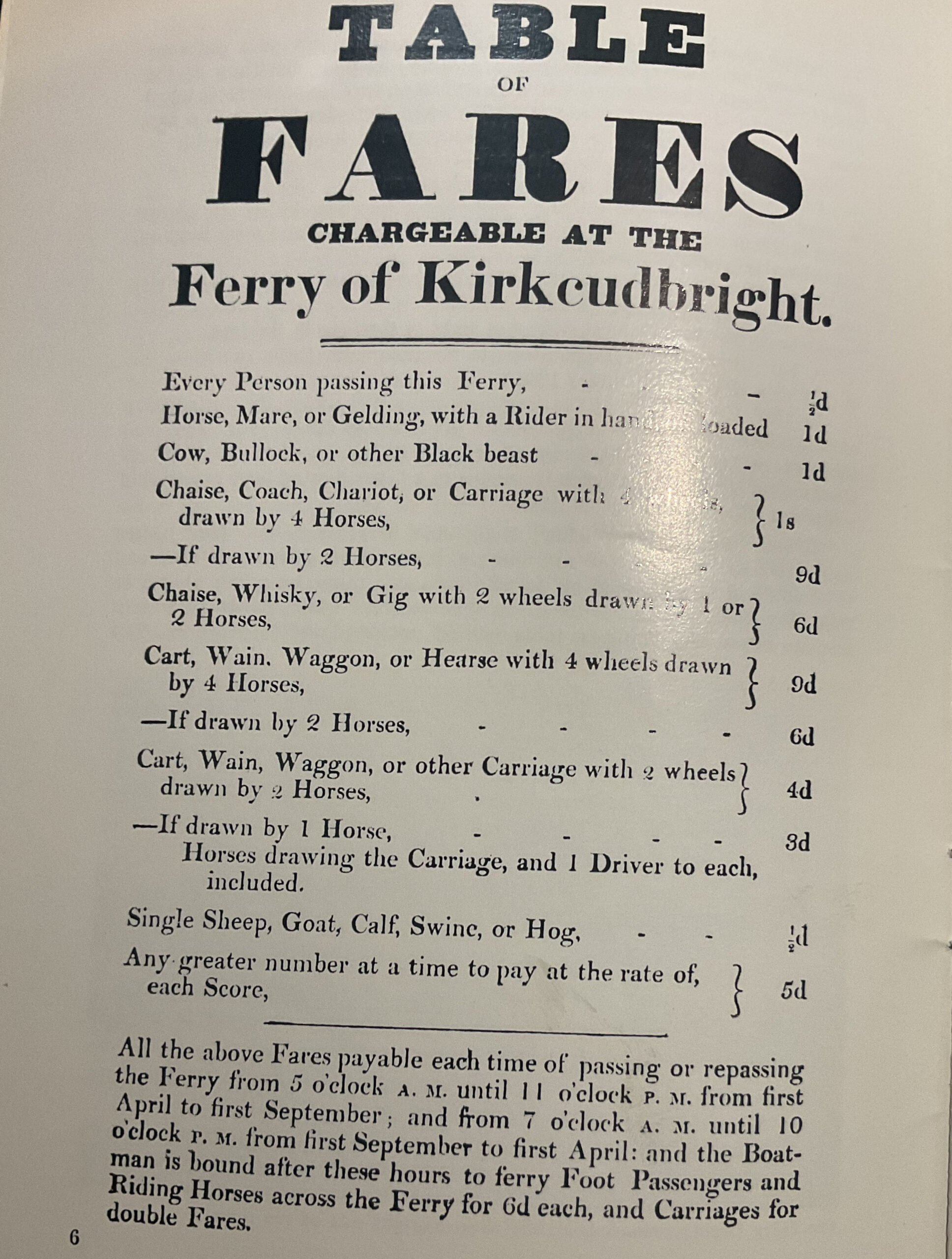
only consider the lives which have been lost at this ferry by drowning. I say nothing of the lives which have been lost in consequence of wet feet, and chill in and out of the boat. I say nothing of the dresses, boots, and shoes destroyed. I say nothing of the rudeness of the boatman and his subs, at one time (the case has for years been different). I say nothing of the uncertainty of at all times getting across, and the chagrin arising on a person finding himself in the middle of a dirty night at a dead-lock on the Castle-sod side, and the ferryboat tied off for the night, and the boatman non est inventus. I say nothing of the expense, farther than that, the ferry is a toll of the very worst description, with a bar within a mile of it, the two together the west approach of the county town. Well, if her forming a very bar to we are desirous to have an end put to such a method of transit, with all the disagreeables [sic] attending it, let us make a long pull, a strong pull, and a pull altogether, for a railway, clubbing our ten pounds, our twenty pounds, and our fifty pounds towards the stock. Let even those who cannot afford their ten pounds club their five pounds or even their one pounds to promote the object. If we had the railway and the bridge, our sweet little county town (Kirkcudbright) would soon advance in its legitimate and natural character, not by factories, but by the establishment of a first-rate cattle market, for which the late eminent agriculturist, Mr Marshall, said it required only a bridge to render it in every way suitable. But I fear that I am encroaching on your space. You know something of our ferry. Do try to induce our folks to agitate for a rail, and thus get the bridge, thereby opening up our town from the west, and enabling us at all times to add to our numerous delightful walks, that towards the Fish house and Nunmill. Your most observant servant, McK.
P.S.-The subsisting Road Act contains a provision for a bridge, so no new Act is required.’
With thanks to Mick McLeod.