
While searching for inspiration on which subject to write about in this blog, I found three books on a similar theme within the archive library here at the  Stewartry museum. Although the genre is the same the subject is different. Each has its own style but packed with information. They are books on individual areas/parishes in The Stewartry of Kirkcudbright. I was just looking for a subject to grab me out of my block. (Too many interesting subjects and don’t know where to start.) They took me down several rabbit holes I did not expect. Old buildings gone such as the Infectious diseases hospital that used to stand in Castle Douglas, the connections King David the first of Scotland had to Galloway, to the Blacksmiths of Twynholm who may turn out to be a past generation of my family. The many new stories they hold gleaning new mysteries to add to the ever-growing list of research I would love to do if I had the time.
‘Castle Douglas through time’ by M Smith and A Devlin is a beautiful pictorial story of Castle Douglas, and the smaller villages surrounding it, through the ages. This has images past and present to compare. It shows old businesses now long forgotten and the modern replacement. It has small descriptions of history and/or geography for each set of photos. Even now, 8 years after publishing, if you took the book with you to Castle Douglas you would see some differences especially in the main streets.
‘Borgue, The land and the people.’ By Adam Gray, is the largest of the three books. This means it also holds the most information. It is very similar in a way to the statistical accounts but only on one parish and its lands from prehistory to the 20th century. It also includes lists upon lists. Timelines of farms and their owners, Ministers, Schoolteachers, the names of those that signed the Borgue Covenant 1638. Each chapter written in a different century covers many subjects including the people in general as well as some small biographies, land, church, agriculture, education.
The third book being ‘Twynholm, A parish and its people’ by Twynholm  Parish heritage group. This one takes a historical stroll through the village then branches off into subjects like agriculture, Industry, and sport. Some of the buildings and businesses having small historical profiles as well as some of Twynholm’s creatives and sportsmen as well. There is also an insightful chapter on the war effort within Twynholm which has a memoir from a German prisoner of war who returned after the war.
You really don’t know what you will find out when you pick up a book from our archive collection. If you do judge books by their covers these should have promised lots of facts, which they do deliver but they can give so much more. These ones took me down many paths, historical, folkloric and an avenue of family history research when I found photos of local businesses and found familiar names. Names connected to my great grandparents. Each of these books can give background on locals, businesses, and the economy of the times.
Another excellent set of books the museum has on similar lines which is a lot older in publication is the 5-volume reprint set of ‘Lands and their Owners in Galloway’ by P H M‘Kerlie (1878). They cover the lands, estates and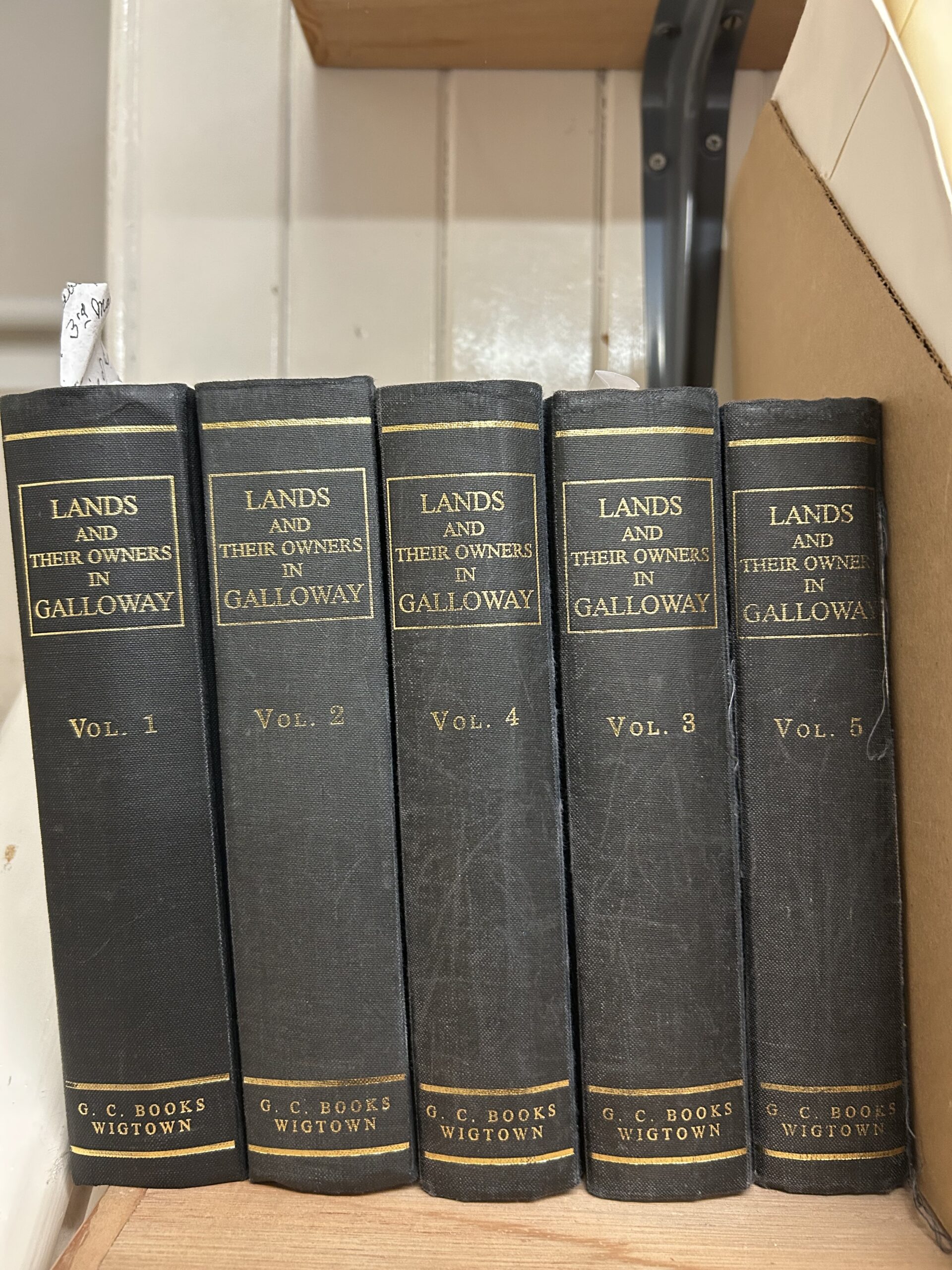 principal Landowners from The Parishes of Kirkmaiden on the Rhinns in the west to the fifth volume ending in the east of Galloway with the Parish of Maxwelltown being the last of the Stewartry of Kirkcudbrightshire parishes written about. A cornucopia of information for any historian or researcher.