
Jim Bell has been posting articles on Facebook which cover a lot of local history. He has kindly allowed us to copy these and post them on our website. They are very varied and interesting. They can be accessed here.
Cochran Hall, Kirkcudbright Academy.
If you’ve ever spent time at Kirkcudbright Academy, or attended a local event in the town, you’ll almost 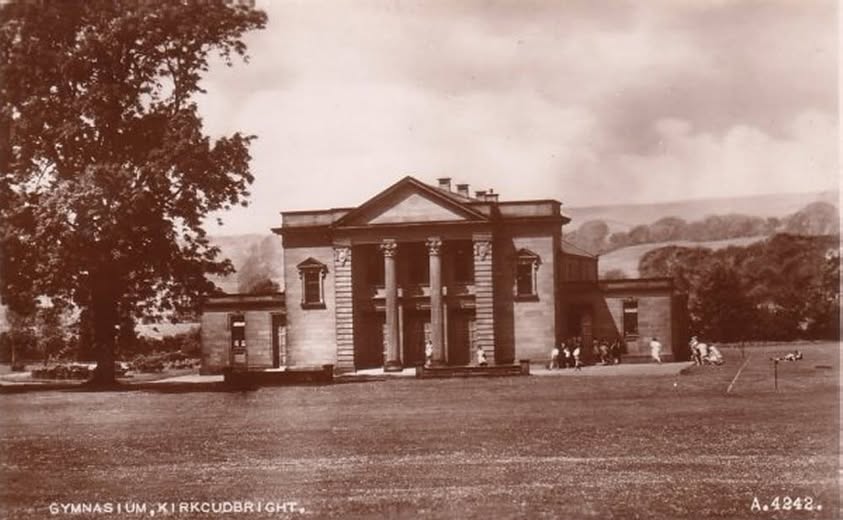 certainly be familiar with the Cochran Hall. It’s a key part of the school’s footprint, serving as everything from an examination room and sports venue to a hall for community gatherings, but the story behind its name belongs to a world far from the Stewartry. The hall owes its existence to Thomas Cochran, an American investment banker whose generosity reconnected him with his family’s Scottish roots.
Born in St. Paul, Minnesota, in 1871, Thomas Cochran rose through the ranks of American finance to become a partner at the prestigious New York firm J.P. Morgan and Company. Despite his life being firmly rooted across the Atlantic, his family tree stretched directly back to the Stewartry, where his ancestors had lived generations earlier. He wasn’t someone who regularly walked the streets of the town, yet his lineage meant that when Kirkcudbright needed support, his name was high on the list of people to contact.
Kirkcudbright Academy underwent a major period of modernisation and expansion in the 1920s to cope with its growing role as the main secondary school for the surrounding district. The Kirkcudbright artist Edward Atkinson Hornel, who was himself a former pupil, sat on the local education committee and took an active role in raising funds for the project.
Hornel wasn’t hesitant about looking further afield, and among those he contacted was Thomas Cochran in New York, whose family had left the Stewartry generations earlier.
When Hornel’s appeal reached Cochran, the banker responded with remarkable philanthropy. He offered to finance a brand-new facility for the school as a lasting memorial to his Kirkcudbright forefathers. Designed
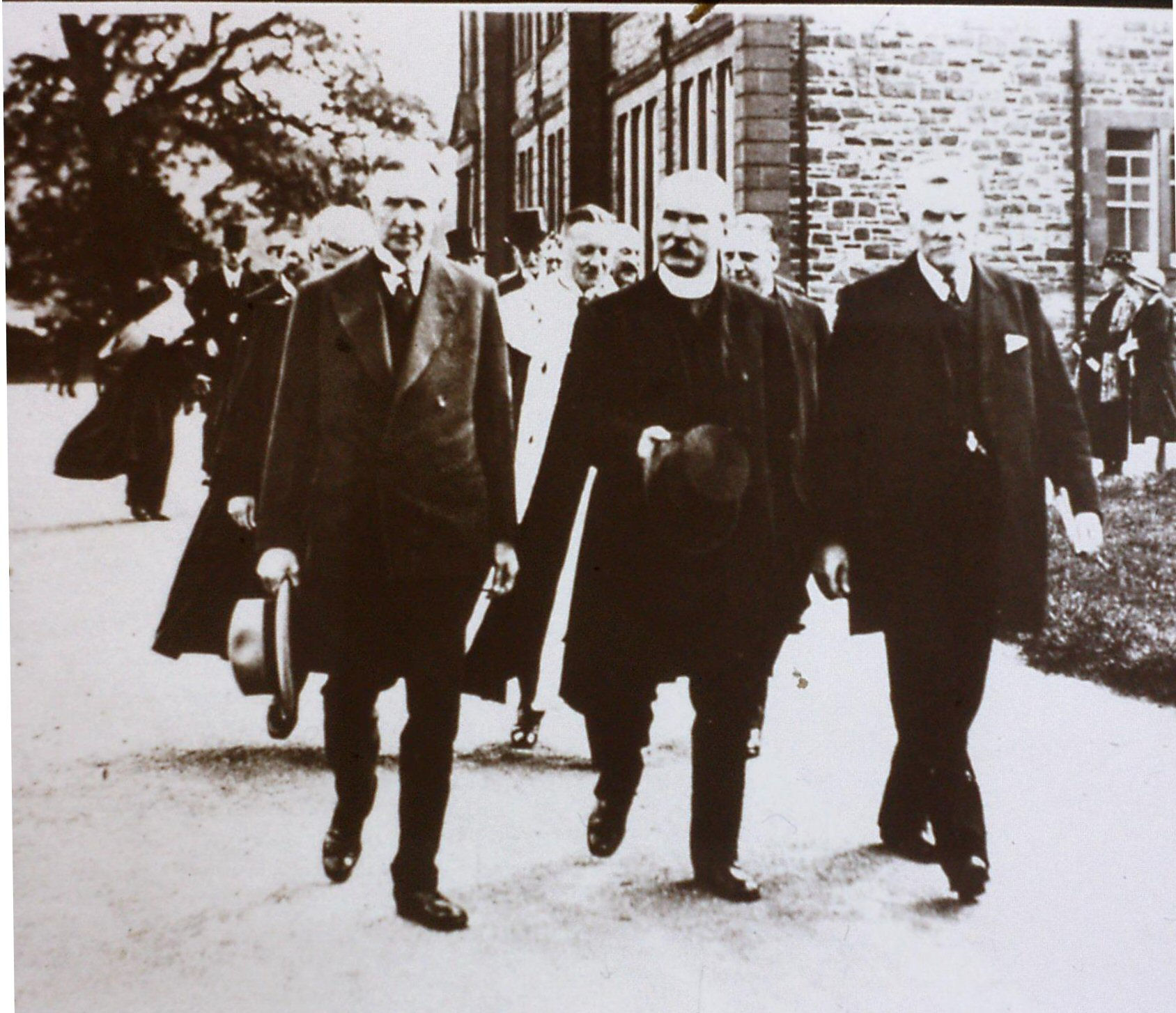
by the architect W.A. McKinnel, the building opened in 1931 as the Cochran Memorial Gymnasium. It was considered a fine addition to the academy, providing physical education facilities that were well ahead of their time for a rural school in the region.
Over the decades, the building expanded its role to become the versatile assembly space known today as the Cochran Hall. It’s played host to generations of school events, theatrical performances, and long-standing community traditions such as the annual Candlemas Ball. Though Cochran passed away in 1936 having spent his life in the United States, his gift ensured that his family name would remain stitched into the social and educational life of Kirkcudbright
The Cochrans of the Cochran Hall.
If you know Kirkcudbright Academy you know the Cochran Hall, though the man whose name it carries never lived in the town. Thomas Cochran, born in St Paul, Minnesota, in 1871, was a New York banker, educated at Phillips Academy Andover and Yale, later a partner in J. P. Morgan & Co. At Andover he founded the Addison Gallery of American Art. At Kirkcudbright he is remembered for the hall he funded in 1931, designed by W. A. McKinnel, given “in memory of his Kirkcudbright ancestors.” Those ancestors are still named on a stone in the kirkyard.
Table Stone 611 records Robert Cochran, who died in Kirkcudbright on 10 March 1821 aged 66, and his wife Elizabeth Guthrie, who died in 1837 aged 73. Their inscription sets out the family in order. Daughter
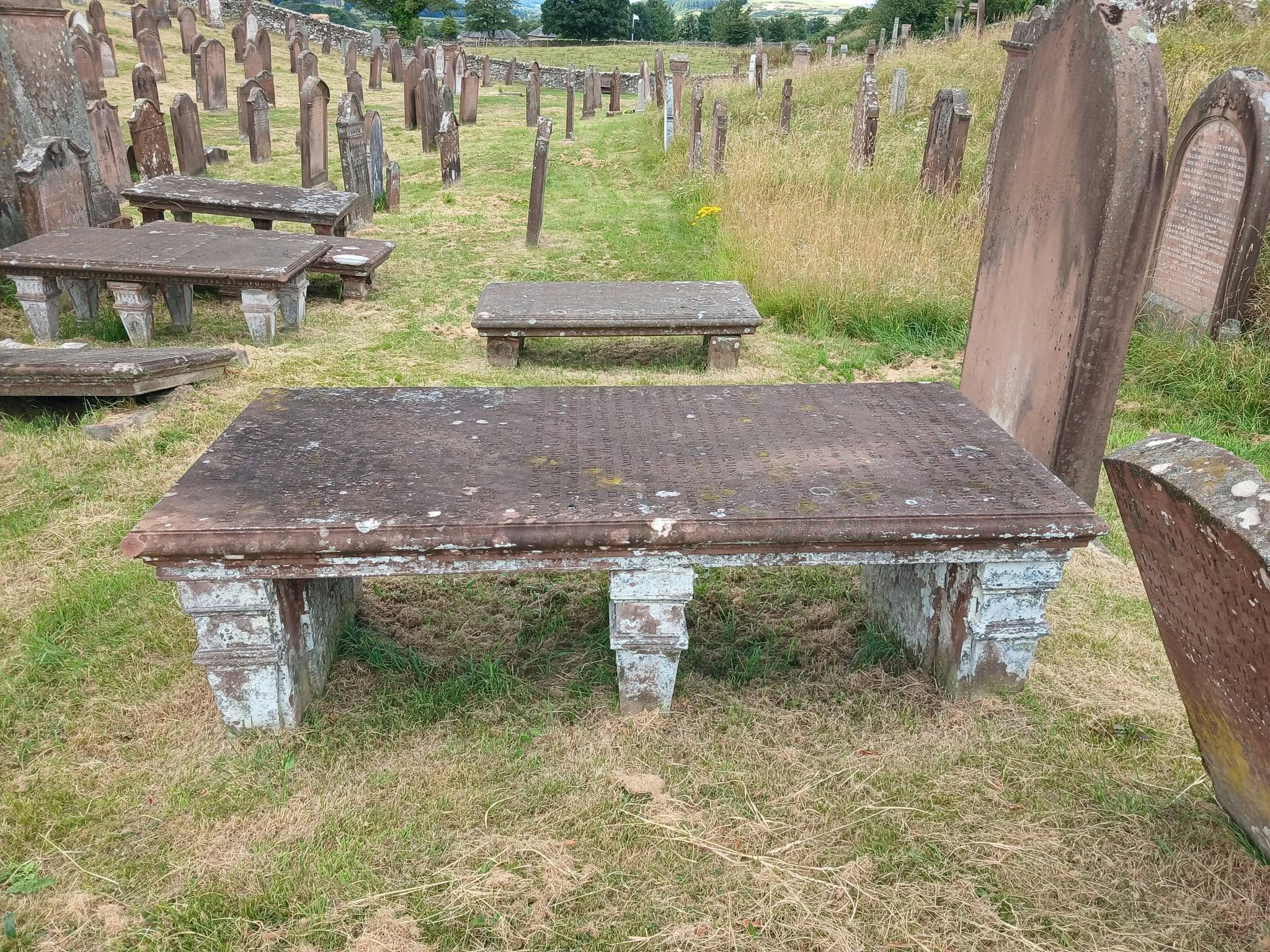
Elizabeth died in 1822 aged 17. Sons Adam, Alexander, Adam and John died young. Peter was lost at sea in 1826 aged 24. Fergus, merchant in New York, died at St Croix in 1831 aged 27. Then the stone turns into a record of emigration. Robert junior died at Albany in 1849; James at Morningside, New York, in 1859; Samuel at Torwood, Dobbs Ferry, in 1859; Wilhelmina in New York in 1862; Isabella in 1864; Charles in 1869. Two married daughters, Agnes McClune and Margaret Barbour, also died in New York, in 1868 and 1886. The last survivor, Thomas Cochran, died in New York in 1889 aged 82 and was interred in Greenwood Cemetery.
The Saint Andrew’s Society of the State of New York confirms that Robert and Elizabeth’s sons were all merchants there. Robert junior, born in 1788, emigrated in 1824 and became senior partner in Cochran & Phillips, dealers in dry goods. James Blair Cochran, born in 1799, joined his brothers Fergus and Thomas in Cochran Brothers, importers of lace and textiles. Fergus, born in 1804, traded under A. G. and F. Cochran at Pearl Street. Charles Paterson Cochran, physician, practised in Jamaica before joining Samuel Cochran & Company in 1848. Samuel, born in 1806, rebuilt his business after the great fire of 1835 and later partnered with his brothers and William Barbour of Castle Douglas. Thomas, born in 1807, worked in France in the lace trade before returning to New York, where he retired comfortably and was remembered for his gifts to his native town.
Robert Cochran of 1821 was therefore patriarch of a Kirkcudbright merchant family whose second generation crossed the Atlantic and prospered in the New York dry‑goods trade. Their table stone was maintained for nearly seventy years by descendants who kept adding their American deaths to their father’s monument at home.
The donor of the Academy hall, Thomas Cochran (1871–1936), was the next generation of that same family — great‑nephew to the merchant brothers and grand‑nephew to Margaret Barbour. He was the son of Thomas Cochran, attorney of St Paul and New York, and Emilie Belden Walsh, and grandson of the emigrant family commemorated on Monument 611. When E. A. Hornel, then on the education committee, wrote to New York for help with the Academy’s modernisation, he was appealing to a network that had been sending money and letters back to Kirkcudbright for a century. The first Thomas gave gifts; the second set one in stone.