
IN 1778, with the American War of Independence in full swing, US naval captain John Paul Jones sets sail for his native Britain in the USS Ranger, intent on bringing the war to the doorsteps of his misguided fellow countrymen. On April 22 1778 he raided Whitehaven and tried to set fire to ships in the harbour. His plan failed as one of his crew deserted and alarmed the town.
The next day, Jones – the “local boy made bad” – attempted to kidnap the Earl of Selkirk from his mansion on St Mary’s Isle, near Kirkcudbright, not far from Jones’s own birthplace of Arbigland. The reason for the the abduction was to use the Earl as a bargaining tool to gain the release of American hostages being held by the British. But it may also be that he had personal reasons for the raid.
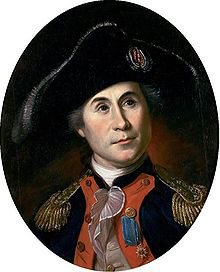
There has been speculation that his gardener father met or knew the Earl, or there is a possibility that his mother was insulted by the Earl. Could it be that Jones, a notoriously hot-headed and difficult man, was looking for some form of personal revenge? It may be that the raid was an example of “class war” against a member of the nobility by the lowly-born yet self-made Jones who fought for his American adopted homeland’s desire for republicanism. Whatever the justification for the “visit”, the Ranger (running a British flag, just in case) set sail for a part of the world that Jones knew well. St Mary’s Isle is a narrow promontory south of Kirkcudbright which Jones stealthily navigated to within rowing distance of land. A raiding party of around 15 men landed and set out for the Earl’s mansion. Their cover story, if met by locals, seems to be that they were a Royal Navy press-gang, or recruiters, an effective yarn, likely to make any sane man avoid the party for fear of being forcibly volunteered.
Arriving at the mansion, the group soon discovered one of the principal rules of kidnap: ensure your intended victim is at home. Unfortunately for them, the Earl was away in London, although the Countess of Selkirk, some guests and the servants were there. Jones was soon involved in an argument with two other officers – Naval ensign Cullam and Marine officer Wallingford. They were determined to sack and burn the mansion in revenge for British attacks on their own properties back in the USA. Jones managed to dissuade them from such actions, but recognised, that unless the men had something to show for their efforts, he would have had a mutiny on his hands.
The solution was to relieve the Countess of her silver plate. The butler tried to conceal it but to no avail and to be certain of getting the lot, an inventory of the silver was demanded. When the items are counted it was noticed that the coffee and teapot were missing. These are produced – with the teapot still full of wet leaves from breakfast. Countess Selkirk was none too happy with events, although she conceded that, considering the circumstances, everyone “really behaved very civilly”. Describing the visit as “by no means desirable”, she is unimpressed with the “vile blackguard look” of Cullam and categorises Jones as somebody who “deserved the gallows oftener than once”.
With the silver in their possession, the party returned to the Ranger before military forces in the area realised what was going on. Jones was not pleased with the behaviour of his shipmates, which didn’t square with his self-image as an officer and gentleman. Returning to his home area, terrorising the neighbourhood, sinking several ships and attempting to kidnap a man is one thing, but stealing a lady’s tea service is quite another. Jones offered to purchase the plate from the crew and they agreed. He was thus able to return it to its rightful owners with a letter explaining his actions and preserve (in his mind at least) his status as a man of honour. It can now be seen in the Stewartry Museum, Kirkcudbright, allegedly still with the tea leaves inside.
After the events on St Mary’s Isle, a possible explanation for Jones’s reluctance to burn down the Earl’s mansion or to be seen as a mere thief and pirate emerges. In the course of an interview given in Holland which eventually filtered through to British newspapers, Jones expresses a surprising desire to return to the Solway Firth area and settle down after the war. Needless to say, British people were outraged at this brazen cheek (or naive failure on Jones’s part to understand the impact of his actions) and it was made clear that a gallows might well be where he would ultimately end up if he were foolish enough to return home. It may be that the failure of his raid on St Mary’s Isle was a low point in John Paul Jones’s otherwise very successful career in the Continental Navy, but for Jones personally, it meant that he would never set foot in his native Scotland again.
(contibuted)